
The true value of smart infrastructure for investors isn’t in the technology itself, but in its measurable impact on Net Operating Income (NOI) and strategic market timing.
- Focus on upgrades with proven ROI, like targeted smart retrofits and LEED certification, which directly lower operating costs and justify rental premiums.
- Mitigate risks by analyzing data privacy policies and understanding the market “hype cycle” to avoid overpaying on speculative value.
Recommendation: Prioritize investments where passive upgrades (insulation, cladding) are synergized with active tech (smart meters, thermostats) for exponential returns on older assets.
For the discerning real estate investor, the term “smart city” is often accompanied by a wave of futuristic promises and billion-dollar market projections. The common narrative suggests that any property within a technologically advanced urban area is a guaranteed goldmine. We are told that fiber optic networks, IoT sensors, and efficient transit automatically translate into higher property values. But savvy investors know that headline-grabbing trends rarely tell the full story. The real challenge isn’t identifying *that* smart infrastructure adds value, but pinpointing precisely *how*, *where*, and *when* that value materializes into tangible returns.
While many analyses focus on broad concepts like enhanced quality of life, a forward-looking investment strategy requires a more granular approach. It demands a shift from simply acknowledging the benefits to quantifying them. This means moving beyond the hype and developing an analytical framework to assess specific upgrades—from building-level LEED certifications to neighborhood-wide data networks. The key lies in understanding the second-order effects: how a specific municipal tech upgrade influences tenant demand, reduces operational expenditures, and ultimately impacts the Net Operating Income (NOI) of a residential asset.
This article provides that framework. We will dissect the investment asymmetry of various smart technologies, separating the high-ROI, proven upgrades from the speculative, low-impact ones. We will explore how to analyze the adoption lifecycle of new infrastructure to time market entry and exit, and how to assess the hidden risks, like data privacy, that can erode value. The goal is to equip you with an investment-savvy perspective to identify the next growth zones based not on buzzwords, but on a clear-eyed analysis of municipal tech’s real impact on your bottom line.
To navigate this complex landscape, this guide breaks down the critical components that influence property value in the context of smart urban development. The following sections provide a detailed analysis of specific technologies, strategies, and risk factors you must consider.
Contents: Unlocking Real Estate Value with Smart Urban Infrastructure
- Why LEED-Certified Buildings Command 15% Higher Rents?
- How to Retrofit Older Apartments with Smart Tech for Under $500 per Unit?
- Solar Integration vs Smart Meters: Which Reduces Tenant Utility Costs More?
- The Surveillance Factor: When Smart Infrastructure Lowers Neighborhood Appeal
- When to Sell: Timing the Market After a Major Infrastructure Upgrade
- Why Modern Cladding Can Increase Appraised Value by 10%?
- Why Your Cloud Storage Has a Carbon Footprint Equal to the Airline Industry?
- Exterior Thermal Insulation: ROI for Older Homes With Solid Walls?
Why LEED-Certified Buildings Command 15% Higher Rents?
The Leadership in Energy and Environmental Design (LEED) certification has long been a benchmark for sustainability in commercial real estate, and its impact on residential properties is becoming increasingly significant. For investors, the appeal of LEED goes far beyond environmental stewardship; it’s a direct driver of financial performance. The perception of higher rents in green buildings is a well-established market belief, but a critical analysis reveals a more nuanced reality. While some studies suggest dramatic premiums, a deeper look is necessary to isolate the true value.
For instance, while a high-level analysis might show a large gap, a 4% adjusted rent premium for LEED buildings, after factoring in location and age, presents a more realistic and defensible figure for investment modeling. This premium is driven by two core factors: higher tenant demand from a growing demographic of eco-conscious and health-aware renters, and lower operating expenses. These tenants are often willing to pay more for benefits like improved indoor air quality and lower utility bills.
The financial case becomes even more compelling when looking at specific multifamily markets. A prime example is Washington D.C., where a 2018 study of LEED-certified apartment buildings revealed tangible, impressive returns. These properties not only achieved 19.7% higher rents but also benefited from 10.1% lower operating expenses compared to their conventional counterparts. Interestingly, the study showed that higher certification levels (Silver and Gold) led to even greater savings, demonstrating that deeper investment in sustainability can yield exponential, not just linear, returns on the bottom line.
Ultimately, for a residential investor, LEED certification acts as a powerful de-risking tool. It provides a third-party validation of a building’s quality and efficiency, making it more attractive to high-quality tenants and future buyers. This translates into lower vacancy rates, stronger tenant retention, and a more resilient asset in a competitive market. The key is to look past the headline numbers and focus on the adjusted premiums and operational savings that directly boost Net Operating Income.
How to Retrofit Older Apartments with Smart Tech for Under $500 per Unit?
While new construction often incorporates smart technology from the ground up, the greatest opportunity for many investors lies in upgrading existing portfolios. Retrofitting older apartment buildings with smart home devices is one of the most cost-effective ways to boost property value, attract modern tenants, and justify rent increases. The key is strategic implementation, focusing on high-impact, low-cost upgrades that offer the most visible benefits to residents. A budget of under $500 per unit is not only feasible but can generate a significant return when executed correctly.
The strategy should prioritize what tenants see and use daily. A smart lock, for instance, is the most visible and appreciated upgrade, enhancing security and convenience. This is followed by devices that offer tangible benefits like security and cost savings, such as video doorbells and smart thermostats. Research from Multi-Housing News confirms this approach, showing that a package of smart home technology can deliver an average ROI of 30% and a 3-5% increase in overall property valuation.
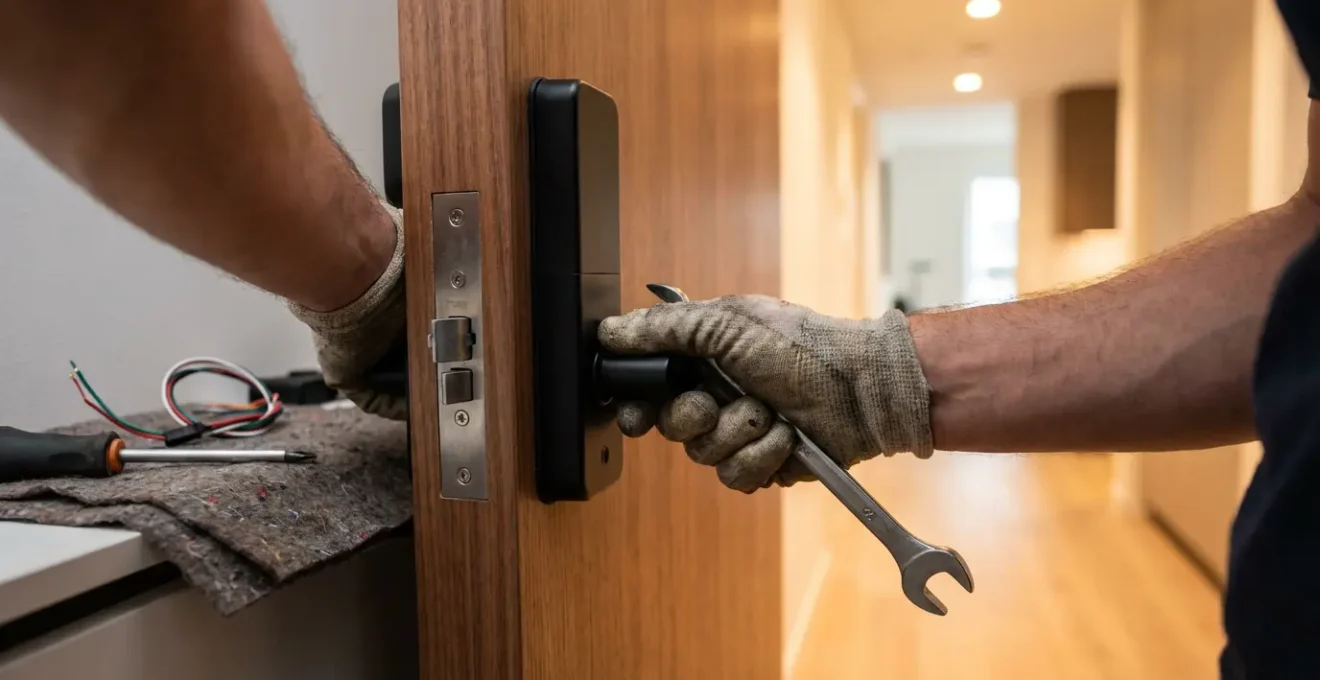
However, the success of a retrofit project hinges on more than just the hardware. A critical error is creating a fragmented “gadget” environment with incompatible devices. This increases maintenance headaches and frustrates tenants. Instead, investors should commit to a unified ecosystem like Google Home or Apple HomeKit. This ensures a seamless user experience and simplifies property management. Furthermore, the business model for monetizing these upgrades is crucial. Rather than a large one-time rent hike, implementing a transparent “tech fee” of $25-30 per month has proven highly effective, with some studies showing a five-year ROI as high as 781% when structured properly.
Your Action Plan: Smart Retrofit for Maximum ROI
- Start with Access: Install smart locks ($150-200). This is the most visible upgrade with immediate tenant appeal and satisfaction.
- Enhance Security: Add a video doorbell ($100-150) to address security perceptions and concerns about package theft.
- Deliver Savings: Deploy a smart thermostat ($120-180), which can deliver 5-15% in energy savings with a rapid payback period.
- Unify the Ecosystem: Choose a single platform (e.g., Google Home, Apple HomeKit) to avoid incompatible gadgets that increase maintenance costs and complexity.
- Structure the Fee: Implement a transparent monthly “Tech Fee” ($25-30) instead of a large rent increase to clearly communicate value and maximize long-term ROI.
Solar Integration vs Smart Meters: Which Reduces Tenant Utility Costs More?
For investors focused on reducing operating expenses and boosting a property’s green credentials, two technologies often come to the forefront: solar panel integration and smart utility meters. The debate often frames them as an “either/or” choice. However, a forward-looking analyst sees this not as a competition, but as a symbiotic relationship. While both can independently reduce utility costs, their combined deployment creates an exponential effect that significantly enhances a property’s value and appeal.
Solar panels directly address energy generation, reducing reliance on the grid and lowering electricity costs, especially in regions with high sun exposure and favorable net metering policies. The impact is direct and easily quantifiable for tenants. Smart meters, on the other hand, focus on energy management. They provide real-time data on consumption, enabling both tenants and property managers to identify inefficiencies, shift usage to off-peak hours, and prevent waste. A smart meter alone can drive behavioral changes that lead to cost savings, but its true power is unlocked when it manages a resource like solar.
The most successful smart city initiatives demonstrate this synergy. Take Singapore’s massive investment in sustainable infrastructure. The city’s intelligent street lighting initiative, which combines solar power with smart management systems, has driven energy consumption down by 30%. This illustrates a crucial principle for property investors: combined systems create exponential returns. A building with solar panels can generate its own power, but a building with solar panels *and* smart meters can optimize the consumption of that power, store it efficiently, and sell excess back to the grid at the most profitable times. This dual approach transforms a building from a passive energy consumer into an active, intelligent node on the grid.
For the residential investor, this means the greatest reduction in tenant utility costs—and the biggest boost to property appeal—comes from deploying both. Solar provides the resource, and smart meters provide the intelligence to manage it. This integrated system not only lowers bills but also builds resilience against grid outages and rising energy prices, a powerful selling point for attracting long-term, high-quality tenants focused on sustainability and cost stability.
The Surveillance Factor: When Smart Infrastructure Lowers Neighborhood Appeal
While smart technology often enhances security, there is a fine line between safety and surveillance. For real estate investors, understanding this distinction is critical, as crossing it can significantly diminish a neighborhood’s appeal and, consequently, property values. The promise of a safer environment is a primary driver for tenant interest in smart buildings; in fact, the 2025 Rently Smart Apartment Trends Report shows that 41% of renters cite feeling safer as the main reason for wanting smart technology. However, this desire for security does not equate to an acceptance of pervasive, opaque monitoring.
The “surveillance factor” becomes a liability when residents feel their privacy is being compromised. This can happen when public spaces are blanketed with cameras without clear policies, or when resident data is collected and used without consent or transparency. The key variable for an investor to analyze is data ownership and governance. Is the data collected by smart streetlights, traffic sensors, and public Wi-Fi controlled by a publicly accountable municipal body or by a private, for-profit corporation? Properties in districts with clear public oversight and transparent policies tend to maintain higher values than those under a cloud of corporate surveillance.
Furthermore, the lack of resident control can create significant friction. Potential tenants, particularly in higher-income brackets, are increasingly sophisticated about data privacy. They will ask about opt-out policies for non-essential monitoring. Neighborhoods or buildings with rigid, all-or-nothing systems are less appealing than those offering flexible controls. This directly impacts tenant turnover and vacancy rates. From a risk management perspective, a poorly secured network of IoT devices also presents a major liability. A cyberattack could expose sensitive resident data, leading to legal challenges and reputational damage. This risk is reflected in insurance premiums, which can be significantly higher for properties with unverified or non-compliant IoT infrastructure.
Therefore, an investor’s due diligence must extend beyond the technology’s features to its underlying policies. Before investing in a “smart” district, one must investigate the data governance framework, resident opt-out capabilities, and the cybersecurity protocols in place. A neighborhood that prioritizes resident privacy is not just more ethical; it is a fundamentally less risky and more valuable long-term investment.
When to Sell: Timing the Market After a Major Infrastructure Upgrade
For a savvy investor, the profit from a major infrastructure upgrade is realized not just by holding the asset, but by strategically timing its sale. The announcement of a new light rail line, a 5G network rollout, or a smart grid implementation triggers a predictable “hype cycle” that directly influences property values. Understanding the distinct phases of this cycle is the key to maximizing returns and avoiding selling too early or too late. The goal is to exit at the peak of tangible value, not the peak of speculation.
The cycle typically begins with the Announcement Phase (0-6 months), marked by a surge in speculative interest and media coverage. Prices may jump based on future promises, creating a risky entry point for uninformed buyers. This is followed by the Construction Phase (6-24 months), which can be disruptive. Noise, traffic, and reduced accessibility may temporarily suppress rents and increase vacancies, creating a potential buying opportunity for investors with a long-term view. The value lift begins to materialize in the Activation Phase (24-36 months), as the new infrastructure becomes operational. This is when initial positive metrics emerge and the first wave of new tenants arrives.
However, the optimal selling window is often not immediately upon completion. The true peak, or the Maturity Phase (36-48 months), occurs when second-order effects become visible. This is when the new infrastructure starts attracting complementary businesses—cafes, retail shops, and other services—that enhance the neighborhood’s overall appeal. This influx of secondary amenities is a powerful indicator that the area has achieved a new, sustainable level of desirability. Selling during this phase captures not only the direct value of the infrastructure but also the added value from the revitalized local economy.
Therefore, an investor’s framework should be based on tracking these phases. Monitor the initial hype, weather the construction disruption, document the initial value lift upon activation, and prepare to sell when the supporting ecosystem of retail and services begins to flourish. Waiting for these second-order effects to solidify can mean the difference between a good return and a truly exceptional one.
Why Modern Cladding Can Increase Appraised Value by 10%?
A building’s exterior, or cladding, is far more than an aesthetic choice; it is a critical component of its performance and value. In the context of smart infrastructure, modern cladding systems have evolved from passive shells into active, intelligent skins that contribute directly to a property’s bottom line. For investors, upgrading a building’s cladding is a capital-intensive decision, but one that can deliver a significant increase in appraised value—often by as much as 10%—by enhancing energy efficiency, reducing operational costs, and future-proofing the asset.
The primary value driver is thermal performance. Systems like ventilated rainscreens create a thermal buffer that dramatically reduces heating and cooling loads. This directly lowers utility costs for both common areas and individual units, a tangible benefit that justifies higher rents and boosts Net Operating Income. When these passive systems are integrated with technology, their value multiplies. Modern cladding can be embedded with sensors that monitor temperature, humidity, and structural integrity, feeding real-time data into the building’s management system.
The Hudson Yards development in New York serves as a powerful case study for this “intelligent skin” approach. Here, advanced cladding systems are not just aesthetic features; they are integral parts of the buildings’ operational infrastructure. Connected to on-site microgrids and generation plants, this smart cladding helps the properties achieve a remarkable 35% reduction in operational costs. This level of efficiency is a massive draw for premium, sustainability-focused corporate and residential tenants who are willing to pay for a high-performance environment.
For an appraiser, these features translate directly into higher value. The reduced operating expenses increase the NOI, which in turn leads to a higher valuation based on the cap rate. Furthermore, modern cladding improves a building’s durability and reduces long-term maintenance costs, enhancing its overall risk profile. It is a strategic investment that pays dividends in energy savings, tenant appeal, and, most importantly, a quantifiable increase in the asset’s appraised worth.
Why Your Cloud Storage Has a Carbon Footprint Equal to the Airline Industry?
While the title’s comparison highlights the massive, often-hidden energy cost of data centers, the core issue for a real estate investor is more pragmatic: how to manage the data generated by a smart building in the most cost-effective and secure way. Every smart lock, thermostat, and sensor in a property generates data that must be processed and stored. The default solution is often cloud-based processing, but this introduces ongoing costs, latency issues, and data sovereignty risks. A more strategic approach, known as edge computing, is emerging as a superior alternative for maximizing property value.
The smart urban infrastructure market is on an explosive growth trajectory. Future Market Insights projects the market will grow from $31.5 billion in 2025 to over $1.135 trillion by 2035, a staggering 43.1% CAGR. This growth will be fueled by data. Edge computing involves processing this data on-site, close to the source, rather than sending it to a distant cloud server. For a residential property, this could mean a small server in a utility closet that manages all the building’s IoT devices. This architectural shift has profound financial implications.
By keeping data processing on-site, property owners can significantly reduce or eliminate ongoing cloud subscription fees. It also gives them full control over resident data, reducing operational risk and enhancing privacy—a key selling point for tenants. From a performance standpoint, edge computing offers near-instantaneous response times for smart devices, creating a superior tenant experience compared to the lag often associated with cloud-dependent systems. The table below outlines the critical differences for an investor.
| Factor | Edge Computing (On-site) | Cloud Processing | Impact on Property Value |
|---|---|---|---|
| Energy Costs | 15-20% lower when solar-powered | Ongoing subscription fees | +3-5% NOI improvement |
| Data Sovereignty | Full owner control | Third-party dependent | Reduced operational risk |
| Latency | <100ms response time | 200-500ms typical | Enhanced tenant experience |
| Carbon Footprint | Minimal when renewable-powered | Significant data center impact | Green certification eligibility |
For investors, the choice between edge and cloud is a strategic one. While the cloud offers simplicity, edge computing offers greater long-term value through cost savings, enhanced security, superior performance, and a stronger sustainability profile, all of which contribute to a more valuable and competitive asset.
Key Takeaways
- True value lies in quantifiable ROI, not smart tech for its own sake. Prioritize upgrades that directly lower operating costs.
- The synergy between passive upgrades (insulation) and active technology (smart thermostats) delivers exponential, not linear, returns.
- Market timing is critical. The optimal time to sell is not at the announcement of an upgrade, but after its second-order effects (like new retail) materialize.
Exterior Thermal Insulation: ROI for Older Homes With Solid Walls?
For investors managing portfolios of older buildings, particularly those with solid wall construction, exterior thermal insulation (ETI) represents one of the highest-impact capital improvements possible. These properties are notoriously inefficient, leading to high utility costs and tenant dissatisfaction. While smart thermostats are often touted as a quick fix, their effectiveness is severely limited by a poor thermal envelope. The true financial return comes from addressing the foundational issue first: the building’s inability to retain heat.
ETI involves applying a layer of insulating material to the outside of the building, which is then covered with a protective, weather-resistant finish. This process fundamentally transforms the building’s thermal performance. The investment directly combats heat loss, leading to a dramatic reduction in the energy required for heating and cooling. This isn’t a marginal improvement; it’s a foundational one. While studies consistently show a 5-15% energy cost reduction from smart systems alone, this figure becomes exponentially higher when combined with proper insulation.
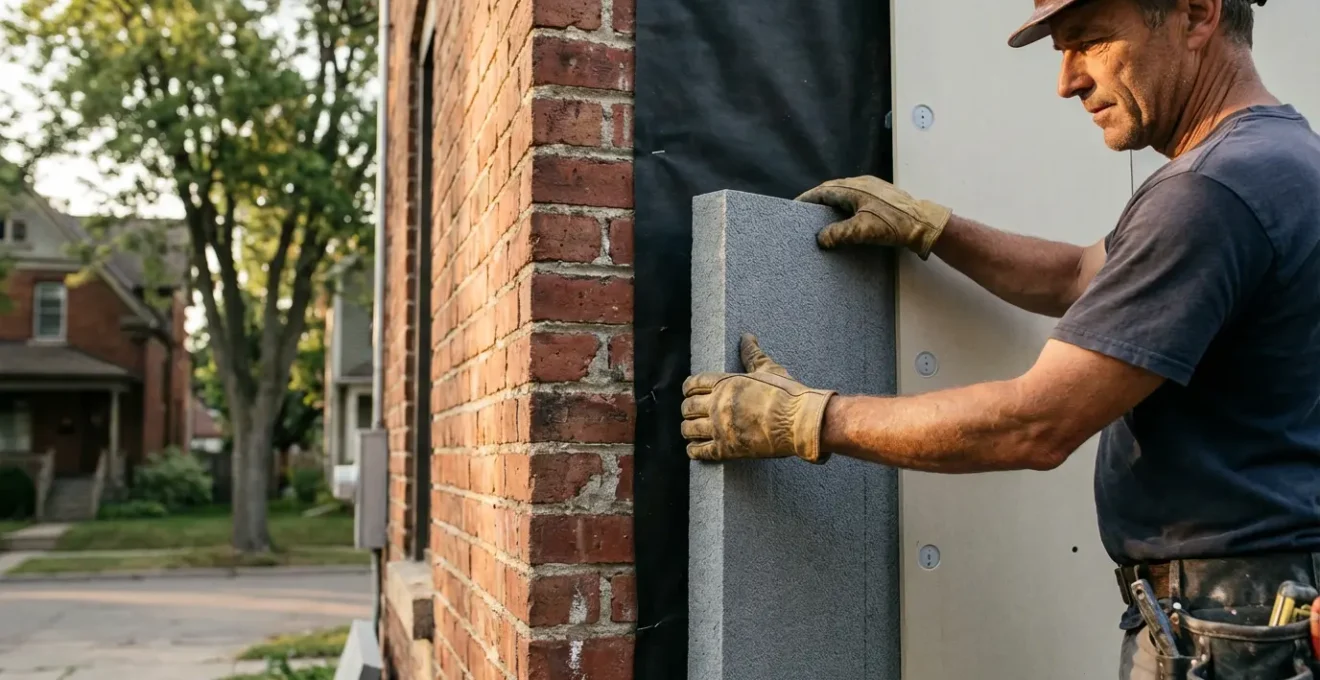
This synergy between passive and active systems is where the real ROI is unlocked. A study by Parks Associates found that multifamily properties combining robust insulation with smart building solutions achieved a 20% increase in operating efficiency and an 18% decrease in operating costs. The report specifically noted this combination was most effective in older buildings, where smart thermostats had minimal impact on their own. By first installing ETI, the smart thermostat has a stable environment to manage, allowing it to operate far more efficiently.
For the investor, the business case is clear. The initial capital outlay for ETI is recouped through several channels: substantially lower common area utility bills, the ability to command higher rents due to lower tenant utility costs and improved comfort, and a significant increase in the property’s appraised value. It transforms an inefficient, dated asset into a high-performing, competitive property that is attractive to modern, energy-conscious tenants. To maximize returns on an older asset, insulate first, then add the intelligence.
Frequently Asked Questions about Smart Infrastructure Investment
Who owns and controls the surveillance data in this smart district?
Verify if data ownership lies with public entities, private corporations, or hybrid partnerships. Properties in areas with publicly accountable systems typically maintain higher values than those under opaque corporate surveillance.
What are the resident opt-out policies for smart monitoring?
Check if residents can opt out of non-essential monitoring without losing access to basic services. Flexible opt-out policies correlate with higher tenant satisfaction and reduced turnover.
How does surveillance infrastructure affect property insurance premiums?
Poorly secured IoT networks can increase liability insurance by 15-25%. Request cybersecurity audit reports and verify compliance with data protection regulations before investing.