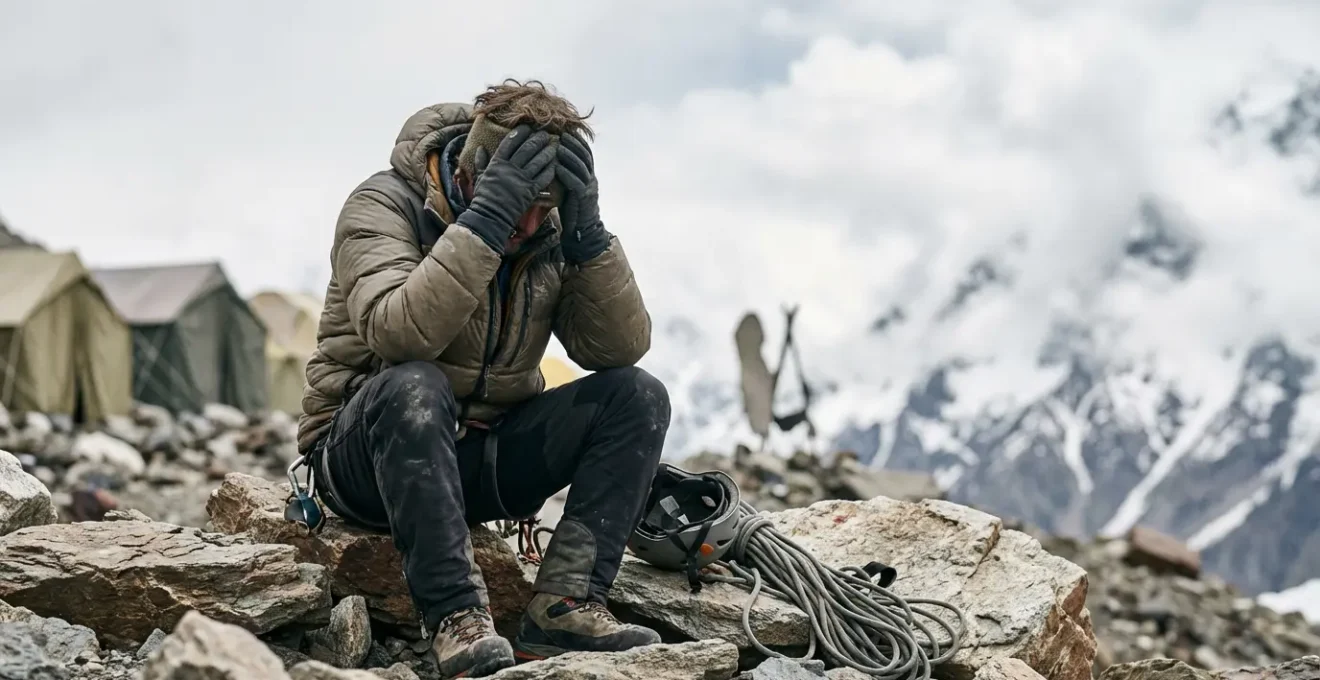
Contrary to common advice, you don’t always need weeks to acclimatize; you need to actively manage your body’s oxygen economy.
- Breathing techniques and strategic hydration directly impact blood oxygen saturation and metabolic waste removal.
- Your dinner choice can either conserve or waste precious oxygen needed for nighttime recovery and acclimatization.
Recommendation: Focus on physiological leverage: control your breathing, fuel with carbohydrates, and learn to distinguish between simple exhaustion and critical hypoxic fatigue.
For trekkers and mountaineers on an accelerated schedule, the standard advice to “ascend slowly” is often a luxury they cannot afford. This creates a dangerous paradox: the very conditions of the trip—a rapid gain in elevation—are the primary risk factors for Acute Mountain Sickness (AMS). While medication like Diamox (acetazolamide) is an option, many seek to manage their acclimatization through non-pharmacological means, either by choice or necessity. The pervasive symptoms of mild AMS—headache, nausea, and fatigue—are not just discomforts; they are critical signals from a body struggling with hypoxia.
The common wisdom to “drink more water” and “listen to your body” is correct but critically incomplete. It fails to provide the operational framework needed for proactive self-management. The key to a successful rapid ascent without medication is not passive endurance but active physiological manipulation. This involves understanding and leveraging the body’s own systems to maximize the efficiency of every molecule of oxygen available in the thin mountain air. It’s about making your body work smarter, not just harder.
This guide moves beyond platitudes to provide a practical, evidence-based toolkit for managing your body’s response to altitude. We will not simply tell you what to do; we will explain the physiological principles behind each strategy, empowering you to make informed decisions when it matters most. From the mechanics of pressure breathing to the metabolic cost of your evening meal, you will learn how to exert control over your acclimatization process.
This article provides a detailed breakdown of eight critical, non-medicinal strategies for managing your body’s response to rapid changes in altitude. The following summary outlines the key areas we will explore, giving you a clear roadmap to a safer and more successful ascent.
Summary: A Guide to Non-Medicinal Altitude Symptom Management
- Why Drinking 4 Liters of Water Helps Mitigate Hypoxia Symptoms?
- How to Use Pressure Breathing to Maintain Saturation at Rest?
- Diamox or Descent: Which Is the Only Guaranteed Cure for AMS?
- The Heavy Protein Dinner That Ruins Your Sleep at High Camp
- Why Your VO2 Max Drops by 10% for Every 1000m of Elevation Gain?
- How to Distinguish Between Glycogen Depletion and Central Fatigue?
- Training With Depleted Glycogen Stores: Fat Loss Miracle or Performance Killer?
- How to Arrange Your Sleeping System to Minimize Oxygen Deprivation at Night?
Why Drinking 4 Liters of Water Helps Mitigate Hypoxia Symptoms?
At high altitude, the directive to “stay hydrated” transcends general health advice and becomes a critical component of physiological management. The primary reason is not just to replace sweat but to counteract the significant, unseen fluid loss that occurs through respiration. In the cold, dry air of the mountains, your body humidifies every breath you exhale, expelling a large volume of water vapor. This process, combined with increased urination (a natural part of acclimatization), rapidly leads to dehydration.
Dehydration thickens the blood, reducing its volume and impairing its ability to efficiently transport oxygen to your tissues and remove metabolic waste. By maintaining a state of euhydration (optimal body water content), you support a healthy blood volume, enabling your cardiovascular system to compensate for the lower oxygen availability. This also supports your Hypoxic Ventilatory Response (HVR), the natural process where your body increases its breathing rate to take in more oxygen. A dehydrated state can blunt this essential response.
A practical hydration protocol is not about chugging water at camp; it’s about consistent intake throughout the day. Aiming for 3-4 liters daily above 10,000 feet (approx. 3,000 meters) is a common guideline, but this needs to be a steady process.
- Pre-hydrate with 1-1.5 liters before starting your daily ascent.
- Sip approximately 500ml every one to two hours while trekking.
- Monitor your urine color. It should be a light yellow. Dark urine indicates dehydration, while completely clear urine may suggest over-hydration and a risk of hyponatremia (low sodium levels), which can be equally dangerous.
Proper hydration is a non-negotiable tool. It directly supports the very systems your body relies on to cope with the stress of hypoxia, making it a cornerstone of any rapid ascent strategy.
How to Use Pressure Breathing to Maintain Saturation at Rest?
Pressure breathing is one of the most effective, yet often misunderstood, techniques for actively managing oxygen levels at altitude. It is a simple mechanical process that increases the pressure within your lungs, facilitating better gas exchange. When you are at rest at high altitude, especially during periods of fatigue, your breathing can become shallow, preventing oxygen from reaching the deepest parts of your lungs where most gas exchange occurs (the alveoli).
The technique involves inhaling normally and then forcefully exhaling through pursed lips, as if you were trying to blow out a candle from a distance. This action creates positive end-expiratory pressure (PEEP) inside your airways. This back-pressure keeps the small air sacs (alveoli) from collapsing at the end of each breath, increasing the surface area available for oxygen to diffuse into the bloodstream. This simple action can lead to a measurable increase in blood oxygen saturation (SpO2). In fact, a 2012 study demonstrated that SpO2 increased from 80.2% to 89.5% after just 15 minutes of slow, deep breathing at a rate of six breaths per minute.
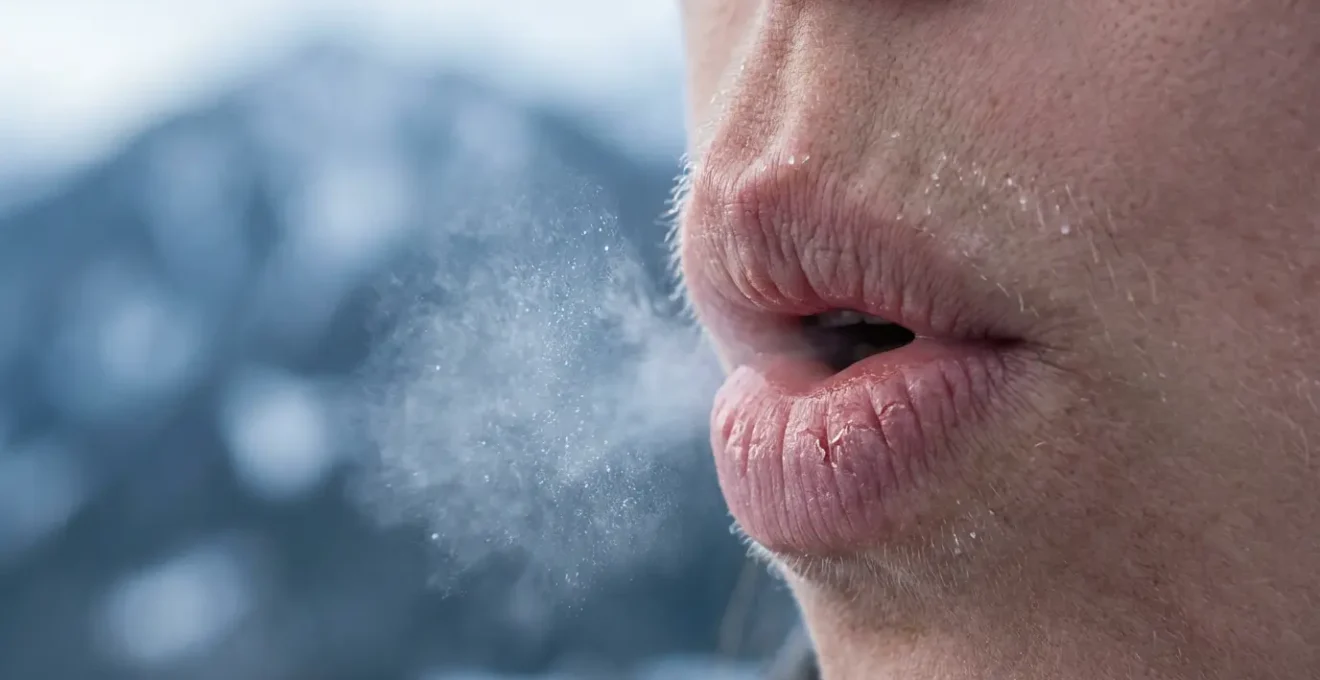
As this image illustrates, the technique is focused entirely on the exhale. By pursing your lips, you create resistance that builds pressure back into the lungs. This isn’t about breathing more; it’s about making each breath more effective. You should practice this technique regularly, especially when you feel short of breath at rest, upon waking up in the morning, or before settling down to sleep. It is a powerful, non-pharmacological tool to improve your alveolar gas exchange and directly combat hypoxia.
Diamox or Descent: Which Is the Only Guaranteed Cure for AMS?
In any discussion of altitude sickness, it is imperative to be unequivocal about one fact: while strategies can manage symptoms and aid acclimatization, the only guaranteed cure for moderate to severe Acute Mountain Sickness (AMS) is descent. Medications like Diamox (acetazolamide) can help prevent and lessen the severity of AMS by stimulating breathing and helping the body acclimatize faster, but they are not a cure. They are a tool, and relying on them to push through worsening symptoms is a life-threatening mistake.
AMS exists on a spectrum. Mild symptoms like a slight headache or fatigue are common and can often be managed with hydration, rest, and the techniques discussed in this guide. However, if symptoms worsen—such as a debilitating headache that doesn’t respond to painkillers, loss of coordination (ataxia), extreme fatigue, or shortness of breath at rest—it signals a progression to a more dangerous state, potentially High-Altitude Cerebral Edema (HACE) or High-Altitude Pulmonary Edema (HAPE). At this point, descent is no longer a choice; it is an emergency medical procedure.
This is a critical point that cannot be overstated. As Dr. Elijah Lovejoy, a high-altitude medicine physician, emphasizes, a slow ascent is the ideal preventative measure. In his work with the University of Colorado Anschutz Medical Campus, he reinforces the foundational principles of altitude safety, stating:
Taking time to slowly ascend is the best way to prevent the development of altitude sickness
– Dr. Elijah Lovejoy, University of Colorado Anschutz Medical Campus
For those on a rapid ascent, this highlights the reduced margin for error. Since the “best way” is unavailable, vigilance and the willingness to descend become your most important safety tools. Never ascend with worsening symptoms. A minimum descent of 300 to 1,000 meters (1,000 to 3,300 feet) can be life-saving.
The Heavy Protein Dinner That Ruins Your Sleep at High Camp
At high altitude, your choice of evening meal has a direct and significant impact on your body’s ability to rest, recover, and acclimatize overnight. The common craving for a hearty, protein-rich meal after a long day of trekking is, from a physiological standpoint, a mistake. The issue lies in the thermic effect of food (TEF), which is the amount of energy—and therefore oxygen—your body must expend to digest, absorb, and metabolize nutrients.
Different macronutrients have vastly different TEF values. Protein is the most metabolically demanding, requiring 20-30% of its own caloric value just for processing. Fats are intermediate, while carbohydrates are the most efficient, with a TEF of only 5-10%. Consuming a large portion of protein for dinner forces your body to divert a significant amount of precious oxygen to the digestive process overnight. This is oxygen that should be used for cellular repair and maintaining brain function while you sleep, a time when your breathing naturally slows and your oxygen saturation (SpO2) drops.
The priority at altitude is fueling with the most oxygen-efficient source available: carbohydrates. In a hypoxic environment, research on altitude nutrition shows that your body’s metabolism shifts, burning significantly more carbohydrates. Your diet should reflect this, with an ideal intake of 60-70% of total calories from carbohydrates.
This comparative table, based on data from Princeton University’s Outdoor Action Program, clearly illustrates the oxygen cost of different food types and is an essential guide for planning high-camp meals.
| Food Type | Thermic Effect | Best Time | Altitude Impact |
|---|---|---|---|
| Complex Carbs (pasta, rice) | 5-10% | Evening/Night | Minimal oxygen demand |
| Simple Carbs | 5-10% | During activity | Quick energy, low O2 cost |
| Protein (meat, bars) | 20-30% | Morning/Noon | High oxygen demand |
| Fats | 10-15% | Moderate intake | Moderate O2 demand |
The conclusion is clear: prioritize complex carbohydrates like pasta, rice, and potatoes for your evening meal. Save protein-heavy foods for breakfast or lunch, when your body is active and your respiratory drive is higher. This simple nutritional strategy conserves oxygen, promotes better sleep, and aids in overall acclimatization.
Why Your VO2 Max Drops by 10% for Every 1000m of Elevation Gain?
The debilitating fatigue experienced at high altitude is not just a feeling; it is a measurable collapse of your aerobic capacity. An individual’s VO2 max, the maximum rate at which their body can consume oxygen during intense exercise, is the gold standard for measuring aerobic fitness. At altitude, this capacity plummets in a predictable way. The general rule is a drop of approximately 10% for every 1,000 meters (around 3,300 feet) gained above 1,500 meters.
This drastic reduction is a direct consequence of physics. It is not the percentage of oxygen in the air that changes (it remains roughly 21%), but the barometric pressure. As you ascend, the column of air above you shortens, and the pressure decreases. This means the oxygen molecules are spread further apart. For every breath you take, you are inhaling fewer oxygen molecules. For instance, atmospheric pressure data shows that at 5,500m (18,000 ft), only 50% of sea level oxygen pressure remains. Your lungs have to work twice as hard to deliver the same amount of oxygen to your blood.
The physiological impact is profound. According to research on athletic performance at altitude, an elite athlete with a sea-level VO2 max of 50 mL/kg/min would see their effective capacity reduced to just 25 mL/kg/min at 5,000 meters. This is equivalent to the aerobic capacity of a sedentary, untrained person at sea level. This explains why simple tasks like tying your boots or walking a few steps can feel monumentally difficult. Your body’s engine is being starved of its primary fuel source, and every physical action must be reconsidered within the context of this severely limited aerobic ceiling.
Understanding this physiological limitation is crucial for pacing and managing expectations. It’s not a failure of fitness or willpower; it’s a predictable biological response to a harsh environment. Accepting this reality allows you to adopt a more conservative pace, focus on efficiency, and avoid pushing your body into a state of extreme exhaustion from which it cannot recover.
How to Distinguish Between Glycogen Depletion and Central Fatigue?
One of the most dangerous moments on a high-altitude trek occurs when a climber experiences a sudden and profound sense of weakness. The critical question at this juncture is: am I simply out of fuel, or is my brain shutting down due to hypoxia? The first condition, peripheral fatigue from glycogen depletion, is easily fixed. The second, central fatigue from hypoxia, is a sign of severe AMS and requires immediate descent.
At altitude, the body’s impaired ability to metabolize fat forces it to rely almost exclusively on its limited glycogen (carbohydrate) stores for energy. It’s easy to burn through these stores during a long day of trekking, leading to a state often called “bonking.” The symptoms—extreme weakness, dizziness, and an inability to continue—can frighteningly mimic those of severe AMS.
Making the wrong diagnosis can have catastrophic consequences. Ascending further while suffering from central fatigue can lead to HACE or HAPE. Descending unnecessarily due to simple glycogen depletion wastes time and energy. Fortunately, there is a simple field diagnostic you can perform to differentiate between the two conditions: the 15-minute gel test.
This protocol provides a clear, actionable method for assessing your condition in the field. It is not a substitute for medical judgment but serves as a vital data point in your decision-making process.
Action Plan: The 15-Minute Gel Test
- Immediate Action: When experiencing profound weakness, stop all activity immediately and find a safe place to rest.
- Fuel Intake: Consume one fast-acting energy gel or an equivalent source of 20-25 grams of simple carbohydrates.
- Observation Period: Set a timer for 15 minutes. Remain completely at rest during this time; do not attempt to move.
- Symptom Analysis: After 15 minutes, assess your condition. A significant improvement in energy and a reduction in weakness strongly indicates glycogen depletion. No improvement or worsening symptoms points toward central fatigue from hypoxia.
- Decision and Action: If symptoms improve, it was a fuel issue. Continue your trek after consuming more complex carbohydrates and maintain regular fueling. If there is no improvement, this is a red flag for severe AMS. Immediate descent is the only safe course of action.
This simple test provides a crucial piece of information. Learning to recognize the difference between an empty tank and a failing engine is a critical skill for any high-altitude adventurer.
Key Takeaways
- Descent is the only absolute cure for moderate to severe altitude sickness; all other strategies are for management and prevention.
- Your body’s oxygen needs are directly affected by your diet. Prioritizing carbohydrates, especially for dinner, conserves oxygen for nighttime recovery.
- You can actively improve your blood oxygen saturation through mechanical means like pressure breathing and by maintaining optimal hydration to support blood volume.
Training With Depleted Glycogen Stores: Fat Loss Miracle or Performance Killer?
In the world of sea-level endurance sports, “fasted cardio” or training with depleted glycogen stores is sometimes used as a strategy to enhance fat metabolism. Applying this logic at high altitude is not just a mistake—it is a performance-killer that can precipitate a medical emergency. The physiological rules change completely in a hypoxic environment, and understanding this is critical for anyone undertaking a rapid ascent.
As previously discussed, hypoxia severely impairs the body’s ability to metabolize fat for energy because fat oxidation is a more oxygen-intensive process than carbohydrate oxidation. Your body becomes overwhelmingly dependent on its finite glycogen reserves. Arriving at altitude with already depleted stores from a pre-trip diet or over-training creates what is known as a “double deficit” scenario. Your body lacks its primary, oxygen-efficient fuel (glycogen) and is simultaneously unable to switch to its secondary fuel source (fat).
This leads to a rapid and catastrophic performance failure. Without adequate fuel, you will experience an earlier onset of both peripheral muscle fatigue (your muscles simply run out of energy) and, more dangerously, central nervous system fatigue (your brain, starved of glucose, begins to shut down). This situation dramatically increases your risk of stumbling, making poor decisions, and being unable to self-rescue. It turns a challenging trek into a fight for survival. The strategy of “training low” (in a glycogen-depleted state) at sea level has no beneficial transfer to performing high in the mountains; it only puts you in a dangerously weakened state from the very start.
The only sound strategy for high-altitude exertion is to begin the expedition with fully loaded glycogen stores and to diligently replenish them with carbohydrate-rich foods and drinks throughout the trip. Disregard any sea-level nutritional fads; at altitude, carbohydrates are not just fuel, they are your primary survival tool.
To safely and effectively manage a rapid ascent, you must move from being a passenger in your body to an active pilot, constantly monitoring and adjusting your systems. Begin applying these principles on your next training hike and make them second nature before you ever set foot on the mountain.
How to Arrange Your Sleeping System to Minimize Oxygen Deprivation at Night?
Sleep is when the body should be resting and acclimatizing, but at high altitude, it can be a period of significant physiological stress. During sleep, your respiratory drive naturally decreases, leading to lower blood oxygen saturation levels. This can be exacerbated by a phenomenon known as periodic breathing, where you may stop breathing for short periods. Furthermore, lying flat can increase intracranial pressure, worsening headaches. A strategic sleeping arrangement can directly mitigate these issues.
The single most effective intervention is to sleep with your head and torso elevated. This simple change uses gravity to your advantage. It helps reduce fluid buildup in the lungs (a precursor to HAPE) and can decrease the intracranial pressure that contributes to altitude headaches. It also makes it mechanically easier for your diaphragm to move, promoting deeper and more regular breathing throughout the night.
You do not need specialized equipment to achieve this. An effective incline can be improvised using the gear you already have. This is a practical, field-proven method to improve your sleep quality and aid nighttime acclimatization.
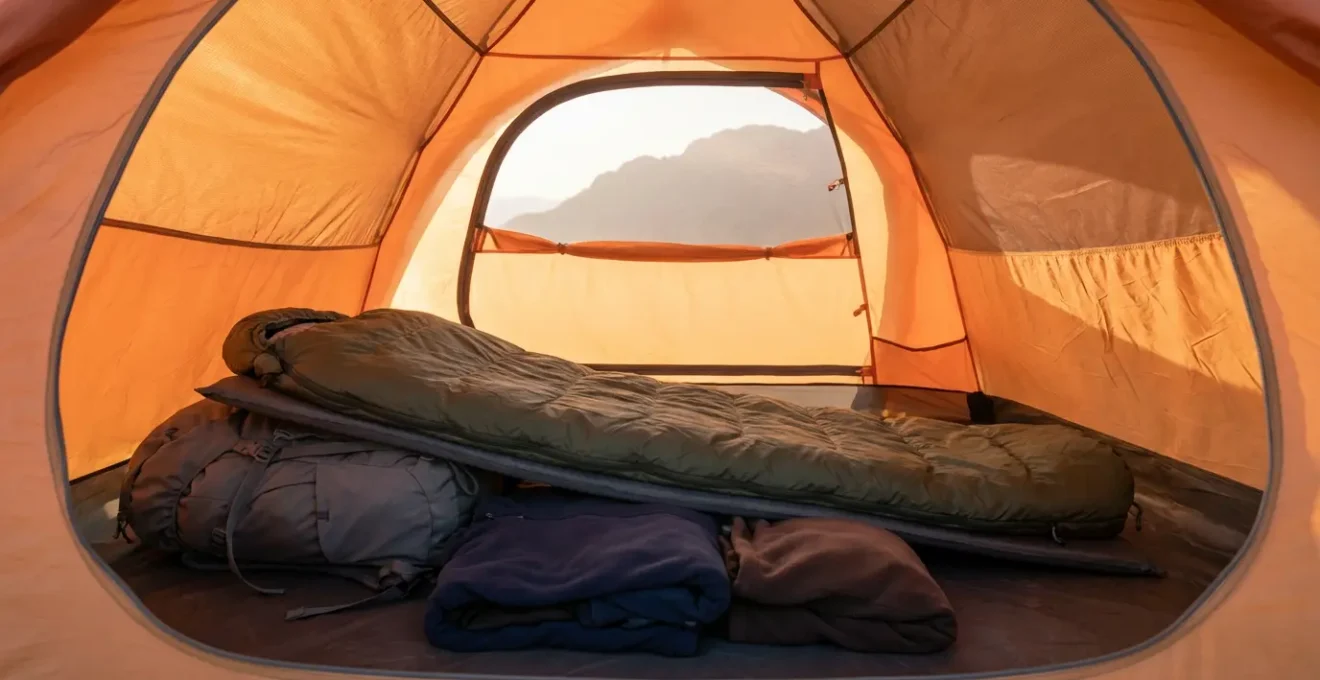
The following steps outline how to create an effective “backpack wedge” to ensure a more restful and physiologically productive night:
- Place your backpack at the head of your sleeping pad to act as a solid base.
- Stack extra clothing, stuff sacks, or other soft items on top of the backpack to create a smooth, comfortable incline of about 30 to 40 degrees.
- Position your sleeping bag and pad so that your entire torso is elevated, while your legs remain relatively flat.
- Crucially, ensure your tent has adequate ventilation, even if it’s cold. Zipping the tent up completely allows carbon dioxide to build up, which can worsen headaches and other AMS symptoms.
- Keep your sleeping bag slightly loosened around your chest to allow for full, unrestricted thoracic expansion with each breath.
This setup is not about comfort alone; it is a medical intervention. By improving your breathing mechanics and reducing fluid pressure while you sleep, you are actively supporting your body’s acclimatization process during its most vulnerable hours.