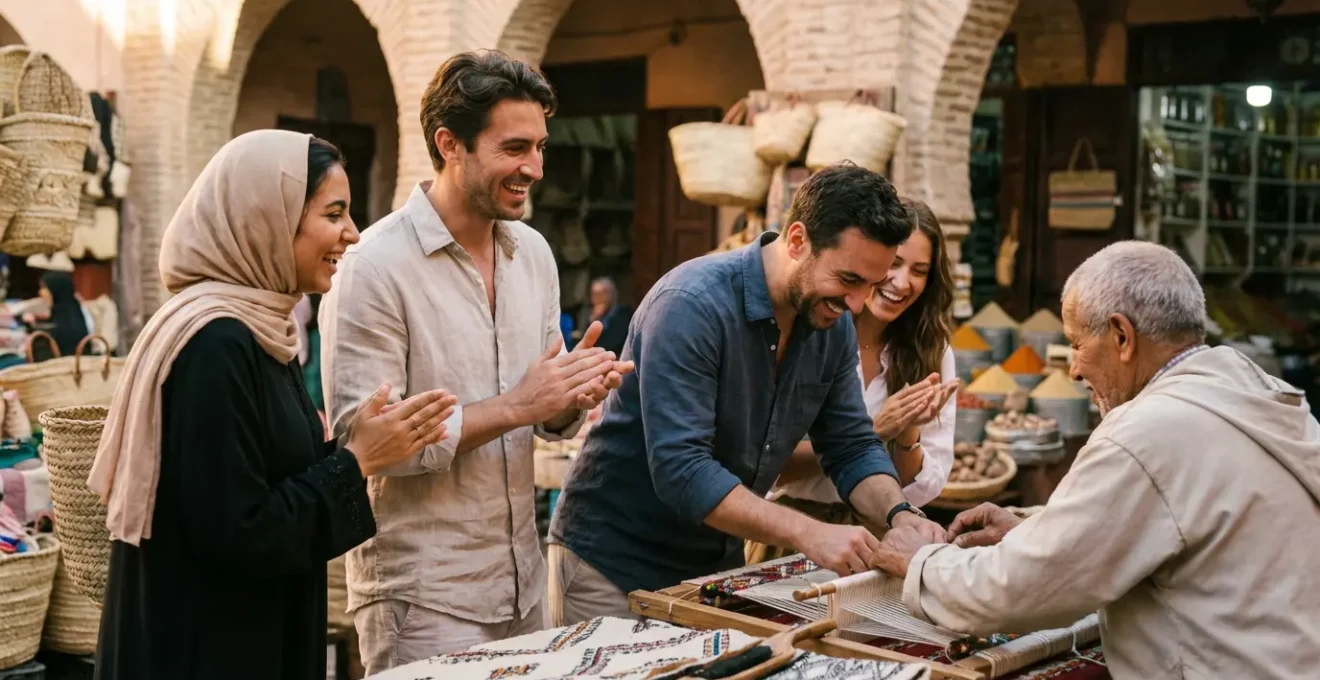
True cultural immersion isn’t a vacation byproduct; it’s a deliberate training ground for elite professional skills.
- Strategic planning, like negotiating a homestay or engineering “void” time in your schedule, maximizes learning opportunities.
- Navigating “cultural friction” in high-context environments yields a higher soft skill ROI than comfortable expat bubbles.
Recommendation: Reframe your next trip as a professional development project, not just a destination, to build tangible leadership competencies.
For many career-driven individuals, travel feels like a necessary escape—a pause from professional development rather than a part of it. The conventional wisdom suggests that simply being in a new place, being “open-minded,” and “talking to locals” will automatically instill valuable soft skills like adaptability and resilience. While well-intentioned, this passive approach leaves significant professional growth on the table, often resulting in little more than a collection of surface-level experiences.
The core issue is that we often travel to minimize friction, seeking comfort and predictability in unfamiliar places. But what if the true key to unlocking profound professional development lies not in avoiding challenges, but in actively seeking them out? What if the most valuable skills are forged in moments of uncertainty, misunderstanding, and managed discomfort? This is the principle of engineered friction: the intentional process of turning travel into a rigorous, real-world leadership laboratory.
This guide moves beyond the platitudes of tourism to offer a strategic blueprint for professionals. We will deconstruct how to methodically use authentic cultural immersion—from planning your itinerary to navigating complex social dynamics—as a powerful tool to cultivate the critical soft skills demanded in today’s global marketplace. It’s time to stop being a tourist of your own potential and start becoming an architect of your professional growth.
To navigate this strategic approach, we will explore the core mechanics of skill-building through travel, from the pitfalls of digital dependency to the profound lessons of ancient resourcefulness. The following sections provide a complete framework for your next developmental journey.
Summary: The Professional’s Guide to Skill-Building Through Travel
- Why Relying on Translation Apps Prevents True Connection with Locals?
- How to Negotiate a Long-Term Homestay for Deep Cultural Learning?
- Guide vs Solo: Which Method Best Reveals the Social Nuances of a Region?
- The Non-Verbal Gestures That Offend Locals in Southeast Asia
- How to Plan an Itinerary That Leaves 40% of Time for Spontaneous Interaction?
- Why Bedouin Nomads Never Wash Dishes with Water in the Deep Desert?
- Portugal D7 vs Dubai Virtual Working: Which Visa Offers Better Net Income?
- What Modern Travelers Can Learn About Resource Management from Desert Expedition Nomads?
Why Relying on Translation Apps Prevents True Connection with Locals?
In the modern traveler’s toolkit, translation apps appear to be a revolutionary asset. They promise to break down language barriers, making foreign lands instantly accessible. While incredibly useful for logistical tasks like ordering a meal or confirming directions, their overuse can become a significant barrier to the very connection professionals seek. They create an illusion of communication while short-circuiting the process of genuine understanding. This is because language is only the tip of the communication iceberg; according to some studies, over 90% of our communication is non-verbal.
When you rely on an app, you are essentially outsourcing the most human part of the interaction. You focus on the screen, not the person. You miss the subtle shifts in tone, the hesitant pauses, the body language, and the eye contact (or lack thereof) that convey the true meaning and emotion behind the words. This is the rich, high-context data where cultural competence is built. By removing the need to struggle, to use gestures, to be vulnerable, and to creatively problem-solve a conversation, you eliminate the “engineered friction” that fosters empathy and deepens your observational skills.
As the Verbal Planet Language Institute notes, true immersion fosters the ability to navigate different cultures effectively by developing empathy and open-mindedness. An app gives you a translation; a genuine, fumbling interaction gives you insight. It teaches you to read a room, to sense discomfort or welcome, and to adapt your own behavior in real time. These are not skills that can be downloaded. They must be earned through the challenging, and ultimately rewarding, work of unmediated human connection.
How to Negotiate a Long-Term Homestay for Deep Cultural Learning?
For the professional seeking true immersion, choosing accommodation is a primary strategic decision. A hotel insulates you, while a short-term rental keeps you at arm’s length. A long-term homestay, however, is the ultimate platform for “engineered friction” and accelerated learning. The key is to reframe the negotiation not as a rental transaction, but as a pitch for a cultural partnership. You are not just a tenant; you are a contributing member of a household, offering your own skills and perspective in exchange for deep cultural access.

As this scene of mutual discussion illustrates, the goal is to establish a relationship built on shared value. Before even discussing price, you must articulate your value proposition. Do you offer English practice for their children? Can you share insights from your professional field? Are you willing to participate in household chores or cook a meal once a week to share your own culture? This approach transforms the dynamic from a simple financial agreement to a collaborative exchange, opening the door to authentic daily routines, family celebrations, and unguarded conversations that are impossible to access otherwise.
This process requires careful planning and genuine curiosity. It’s about asking discovery questions that go beyond the room and board to understand the family’s lifestyle, expectations, and communication patterns. By establishing this deeper agreement, you create a structured environment for learning that makes the family your allies and cultural interpreters, not just your landlords.
Your Action Plan: Securing a Cultural Partnership
- Frame the Pitch: Prepare your value proposition. Clearly define what you offer the family beyond rent (e.g., language practice, skill sharing, cultural exchange).
- Outline Contributions: List specific, tangible things you are willing to do, such as weekly English conversation hours or sharing professional knowledge.
- Define Learning Outcomes: Go beyond accommodation terms to negotiate your cultural learning goals. Ask for inclusion in family meals or local community events.
- Ask Discovery Questions: Inquire about typical family routines, household dynamics, and communication styles to ensure a good fit and manage expectations.
- Establish a Second-Level Agreement: Formalize (even verbally) the cultural exchange aspect, ensuring both parties understand and agree to the mutual learning goals.
Guide vs Solo: Which Method Best Reveals the Social Nuances of a Region?
A fundamental strategic choice for any immersion journey is whether to explore with a local guide or venture out solo. The common perception pits the structured knowledge of a guide against the spontaneous discovery of solo travel. However, for a professional focused on developing soft skills, the most effective approach is often a hybrid model: using a guide not as a tour operator, but as a “cultural calibrator” during the initial phase of your immersion.
The first 48 hours in a new culture are critical. Your senses are overwhelmed, and your existing behavioral patterns are misaligned with local norms. A skilled guide can accelerate your adaptation by decoding the invisible social rules in real-time. They can explain *why* people stand so close in line, *why* a certain phrase is considered rude, or *why* direct negotiation is avoided. This initial calibration provides a framework that makes subsequent solo exploration far more insightful. Without it, a solo traveler might see *what* is happening but will struggle to understand *why*, often leading to misinterpretation and frustration.
Case Study: The EF Language Immersion Model
The power of combining guided and independent learning is well-documented. A comprehensive study of participants in EF Language Immersion programs, which utilize a blended approach, revealed extraordinary results. The findings showed that 90% improved their soft skills like communication and adaptability, and 96% reported a significant increase in their overall cultural competence. This demonstrates that a structured start enhances, rather than hinders, the benefits of independent discovery.
Ultimately, the choice depends on your objectives and personality. An extrovert comfortable with ambiguity might thrive on a “pure solo” approach, while an introvert may gain more from the structured insights of a local oracle. The “Guide-as-Calibrator” model offers a powerful middle ground for most professionals.
| Approach | First 48 Hours | Ongoing Strategy | Best For |
|---|---|---|---|
| Guide-as-Calibrator | Intensive cultural decoding with guide | Independent exploration with reference points | Introverts needing structure |
| Local Oracle Method | Establish relationship with stationary local | Daily check-ins for cultural interpretation | Solo travelers seeking insight |
| Pure Solo | Immediate immersion | Trial-and-error learning | Extroverts comfortable with ambiguity |
The Non-Verbal Gestures That Offend Locals in Southeast Asia
Nowhere is the potential for “engineered friction” more acute than in the realm of non-verbal communication, particularly in the high-context cultures of Southeast Asia. A gesture that is benign or positive in a Western context can be deeply offensive elsewhere. Pointing with your index finger, touching someone’s head, or showing the soles of your feet are classic examples of actions that can instantly create a barrier, shut down a negotiation, or cause unintended disrespect. Mastering these nuances is not just about avoiding offense; it’s about demonstrating a high level of situational awareness and respect, core components of cultural intelligence (CQ).
In some Asian cultures, maintaining eye contact during a conversation may be perceived as aggressive or disrespectful, whereas in Western cultures, it is often viewed as a sign of confidence and attentiveness.
– The Collective Leadership Institute, Developing Cross-Cultural Communication Skills for Global Leadership
This single example of eye contact highlights the complexity. What is a sign of engagement in one culture is a sign of aggression in another. For a global professional, the ability to recognize and adapt to these subtle codes is a critical leadership skill. It shows you can operate effectively outside your own cultural defaults. But mistakes are inevitable, and it is in the recovery that resilience is truly built. Having a clear protocol for when you misstep is just as important as trying to avoid the mistake in the first place.
When a gestural mistake is made, a swift and culturally appropriate apology can not only repair the damage but actually strengthen the relationship by showing humility and a genuine desire to learn. Here is a simple protocol for recovery:
- Show Humility: Immediately lower your body position slightly. This is a near-universal sign of deference and respect.
- Adopt the Correct Posture: Place your hands together in a prayer-like position (the “wai” in Thailand, or similar gestures) at chest level.
- Manage Eye Contact: Make brief, respectful eye contact to acknowledge the person, then look down to show you are not challenging them.
- Express Regret: Offer a gentle, genuine smile. You don’t need words to show you are sorry.
- Wait for Acknowledgment: Pause and wait for a nod or signal from the other person before continuing the interaction.
How to Plan an Itinerary That Leaves 40% of Time for Spontaneous Interaction?
One of the greatest mistakes professionals make when planning an immersion trip is creating a packed, back-to-back itinerary. The desire to maximize the experience often leads to a schedule that leaves no room for the most valuable learning opportunities: spontaneous interactions. True immersion doesn’t happen on a guided tour or at a scheduled meeting; it happens in the unplanned moments—the unexpected conversation in a market, the invitation to a local’s home, or the time spent simply observing the rhythm of a neighborhood cafe. This requires a radical shift in planning, from a mindset of “filling time” to one of “creating space.”
This strategic approach to scheduling is called the “Anchor and Void” methodology. Instead of planning every day, you plan “anchor” activities—a few key meetings, specific sites, or non-negotiable tasks. These anchors provide structure to your week. The rest of the time is deliberately left empty, creating “voids” for spontaneity. This intentional lack of planning is your immersion blueprint for serendipity.
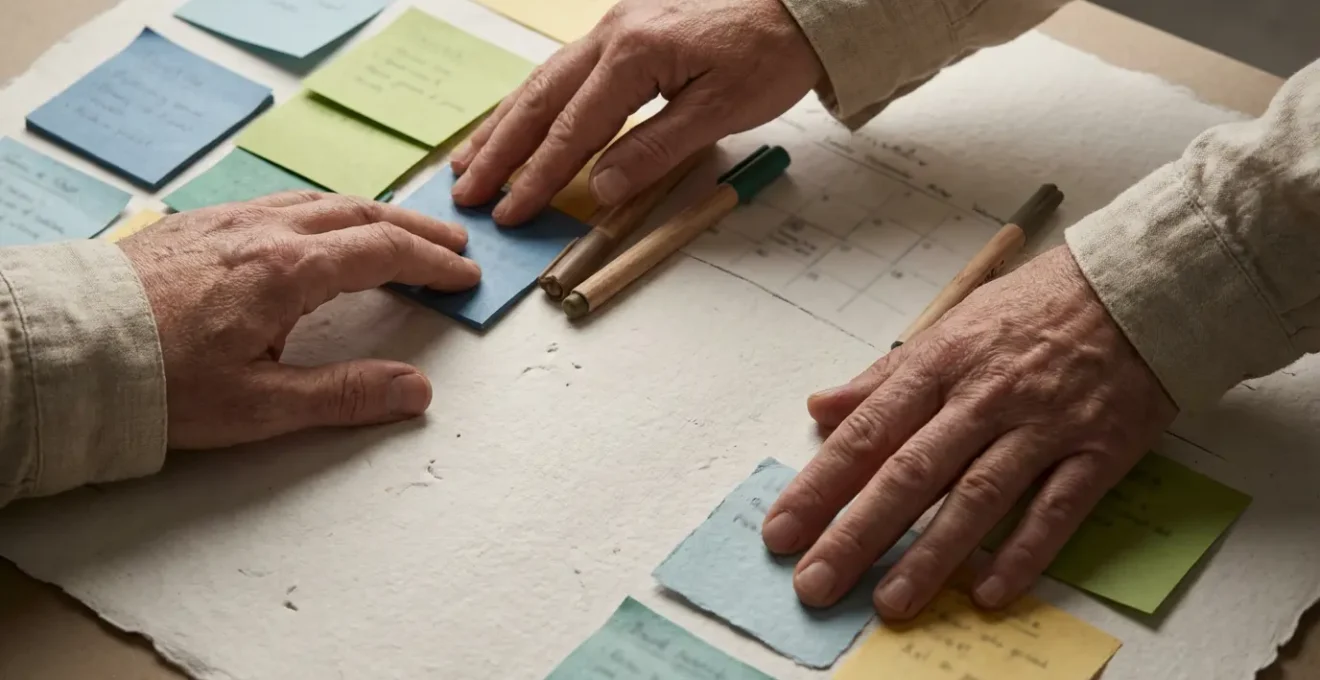
This visual of a planner with strategic empty spaces is the key. The goal is to build a framework, not a cage. Research supports this, with some studies on effective cultural immersion programs showing an optimal 60/40 split for immersion activities, with 60% planned and 40% left for spontaneous discovery. This ratio provides enough structure to ensure key objectives are met, while preserving ample time for the unpredictable encounters that build adaptability and real-world problem-solving skills.
Why Bedouin Nomads Never Wash Dishes with Water in the Deep Desert?
In the extreme environment of the deep desert, water is more valuable than gold. For Bedouin nomads, every drop is allocated for survival—drinking and sustaining their animals. Washing dishes with this precious resource would be an unthinkable luxury. Instead, they use a method that seems counter-intuitive to an outsider: they scrub their pots and plates clean with sand. This practice offers a profound lesson in resource management and constraint-driven innovation for the modern professional.
The sand-cleaning method is a perfect example of what can be termed a “Context-Appropriate Solution.” By urban hygiene standards, it is inadequate. But in the desert, it is the optimal solution. It achieves the necessary outcome—a clean enough vessel for the next meal—while conserving the most critical resource. This forces a shift in thinking from “what is the best solution?” to “what is the best solution *given these constraints*?”
Case Study: The Minimum Viable Process
Analysis of Bedouin practices demonstrates a direct parallel to the concept of the Minimum Viable Product (MVP) in business innovation. Sand cleaning is a “Minimum Viable Process.” It is the simplest possible method that achieves the core function required for the group’s continued survival. For professionals, this teaches a powerful lesson: when faced with severe constraints (of time, budget, or personnel), the goal is not to replicate a perfect, resource-intensive process, but to innovate a new, lean process that meets the essential need. This is the heart of a resource scarcity mindset, a critical skill for any leader navigating a volatile business environment.
Embracing this mindset means learning to identify the one or two truly critical resources in any situation and ruthlessly protecting them. It’s about developing the ingenuity to find alternative, “good enough” solutions for everything else. This is a skill honed in the desert but invaluable in the boardroom.
Portugal D7 vs Dubai Virtual Working: Which Visa Offers Better Net Income?
On the surface, comparing visa options like Portugal’s D7 and Dubai’s Virtual Working visa seems to be a purely financial calculation. Dubai, with its 0% income tax, appears to be the clear winner for maximizing net income. However, for a professional focused on long-term career growth, this calculation is dangerously incomplete. It ignores the most critical variable: the “Soft Skill ROI” generated by the environment itself. The real question is not where you can earn more, but where you can *learn* more.
Dubai offers a streamlined, low-friction experience. English is widely spoken, the bureaucracy is efficient, and a large expat bubble makes it easy to function without deep cultural adaptation. Portugal, in contrast, presents high friction: a complex bureaucracy, the necessity of learning Portuguese, and a culture with deep, nuanced social codes. While financially more taxing in the short term, the Portuguese environment is a far richer training ground for developing high-value soft skills.
Navigating Portuguese bureaucracy builds resilience and creative problem-solving. Learning the language develops cognitive flexibility and communication skills. Integrating into the local community, outside of an expat bubble, provides a masterclass in cultural intelligence. These are the skills that differentiate leaders. As research from the Harvard Business Review shows, organizations with high cultural diversity are 70% more likely to capture new markets, a testament to the business value of the skills honed in high-friction environments.
| Factor | Portugal D7 | Dubai Virtual Working |
|---|---|---|
| Cultural Friction | High (language, bureaucracy) | Low (English, streamlined) |
| Soft Skill Development | High resilience building | Moderate networking skills |
| Language Asset Value | Portuguese (230M speakers) | Limited new language exposure |
| Deep Cultural Immersion | High potential | Expat bubble risk |
| Long-term Career ROI | High (unique skillset) | Moderate (common pathway) |
Key Takeaways
- True skill development arises from “engineered friction”—deliberately choosing challenging scenarios over comfortable ones.
- An “Immersion Blueprint” that reserves at least 40% of your time for spontaneity is more effective than a packed, rigid itinerary.
- The highest “Soft Skill ROI” comes from high-friction environments that force the development of resilience, adaptability, and cultural intelligence.
What Modern Travelers Can Learn About Resource Management from Desert Expedition Nomads?
The lessons from nomadic cultures extend far beyond simple resource conservation. They offer a sophisticated masterclass in strategic thinking and risk management that is directly applicable to modern C-suite leadership. The harsh, unpredictable nature of the desert has forced these groups to develop mental models for survival that are incredibly powerful when applied to the volatile world of business. One of the most critical of these is a practice that mirrors a modern project management technique: “Pre-Mortem Thinking.”
While a corporate team might sit in a boardroom to imagine a project’s failure, a desert nomad does this constantly and instinctively. Before a journey, they don’t just plan for the best route; they anticipate the failure scenarios. What if the well is dry? What if a sandstorm hits? What if an animal falls ill? For every potential crisis, they have a contingency plan, a backup resource, or an alternative strategy. This is not pessimism; it is elite risk management born from necessity. It is the ability to look ahead, identify the most critical points of failure, and proactively mitigate them.
Case Study: Pre-Mortem Thinking in Nomadic Journeys
Desert nomads exemplify this forward-looking risk assessment. Their entire social structure and knowledge base are designed to manage future uncertainty. This practice of constantly anticipating failure to ensure survival is a direct, real-world application of the “pre-mortem” exercise used by top strategic teams. Adopting this mindset allows a professional to move from reactive problem-solving to proactive risk optimization, a skill that is invaluable for anyone responsible for a team, a budget, or a critical project.
Ultimately, the skills honed through deep cultural immersion are what elevate a competent manager to an effective global leader. It is about developing a more holistic and adaptable intelligence.
Leadership encompasses three quotients: IQ (intelligence quotient), EQ (emotional quotient), and CQ (cultural intelligence quotient). For companies to be truly innovative, they must foster collaboration among people from diverse backgrounds.
– Professor Jean Lee, CEIBS Professor of Management and Michelin Chair
This trifecta of intelligence—IQ, EQ, and CQ—is the ultimate goal. Authentic immersion is one of the most powerful ways to develop the latter two. The impact is measurable, with Harvard Business Review analysis revealing that culturally diverse teams can achieve a 35% improvement in team performance.
To transform your next journey into a powerful professional development opportunity, begin by drafting your own Immersion Blueprint. Define your learning objectives, identify sources of “engineered friction,” and plan for the unplanned. The skills you build will deliver a return on investment long after you’ve returned home.