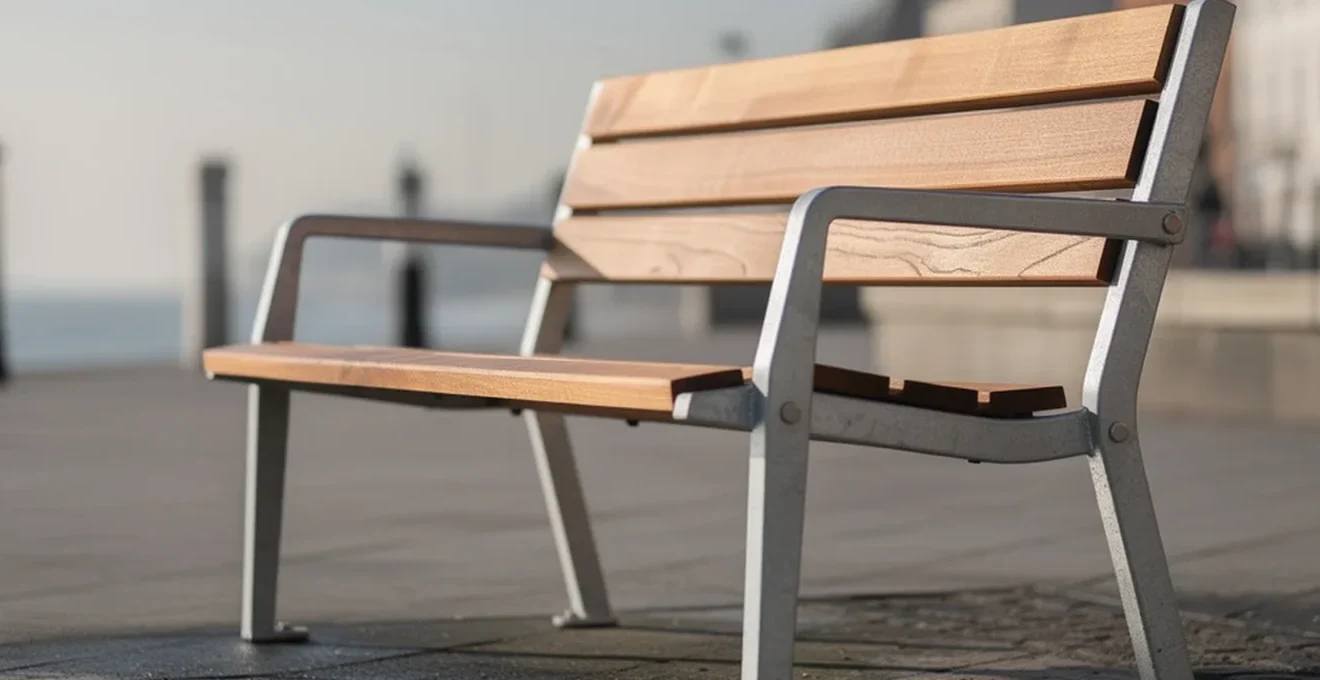
Public spaces demand furniture that can survive years of foot traffic, extreme weather and heavy daily use without losing its function or appearance. Whether specifying benches for a city park, seating for a school courtyard or bollards along a coastal promenade, the material behind the design determines how long that investment will last. Poor choices lead to rust, cracking, fading and eventual replacement, while the right materials, properly finished and tested, can serve communities for decades with minimal upkeep. This article looks at the material science, testing standards, environmental stressors and lifecycle costs that should guide any decision on outdoor public furniture, helping architects, contractors and facilities managers choose materials that genuinely stand the test of time.
Material science fundamentals behind Weather-Resistant furniture
Outdoor furniture faces a combination of forces that indoor furniture never encounters: constant UV exposure, rain, temperature swings and wind. Understanding how different materials respond to these conditions at a structural level is the first step in making a sound specification decision.
Corrosion resistance in galvanised and stainless steel frames
Steel is prized for its strength, but untreated steel corrodes quickly once moisture reaches the bare metal. Galvanising protects steel by coating it in a layer of zinc, which corrodes preferentially and protects the steel beneath even where the coating is scratched. Stainless steel takes a different approach, relying on chromium and nickel content to form a passive, self-repairing oxide layer on the surface. Electropolished stainless steel, such as 316L and 304L grades, concentrates these protective elements at the surface, improving corrosion resistance further and leaving a bright, lasting finish. This makes stainless steel a strong choice for structural elements that need both strength and long-term resistance to rust, particularly where the coating might be damaged through vandalism or wear.
UV stabilisation processes for Powder-Coated finishes
Powder coating is one of the most common protective finishes for aluminium and steel street furniture. The process involves applying a fluidised powder to the metal structure using an electrostatic spray, then curing it at temperatures between roughly 160°C and 210°C to bond the coating for maximum solidity and resistance. This heat-cured finish resists scratches, chipping and fading far better than standard paint, and it forms a barrier against both moisture and UV radiation. Because aluminium naturally resists rust, a powder-coated aluminium frame combines corrosion resistance with UV stability, making it one of the most reliable choices for exposed public installations.
Hardwood density and grain structure: teak, iroko and robinia compared
Not all timber performs equally outdoors. Teak is widely regarded as a superior outdoor wood because its natural oils repel water and resist rot, allowing furniture to survive for decades with minimal treatment. Reputable suppliers source teak from sustainable plantations where trees are aged 60 to 80 years before harvesting, and provenance should always be checked when buying teak furniture. Left untreated, teak weathers to a silver-grey patina; this is purely cosmetic and does not affect the wood’s strength, though seasonal oiling helps preserve its natural golden colour.
Iroko, sometimes called African teak despite being unrelated to the teak family, offers similarly strong resistance to UV rays, chlorine and seawater, making it a common choice for decking, boat building and outdoor furniture. It starts out yellowish and deepens to an amber brown over time. FSC® 100% Acacia is another dense, hardwearing timber with a distinctive grain, often protected with a polyurethane finish to guard against moisture, UV exposure, warping and colour loss. Each of these hardwoods brings a different balance of density, grain character and natural weather resistance, but all outperform untreated softwoods such as pine, which absorb moisture quickly and can rot within a season or two without constant maintenance.
Polymer composites and HDPE performance under thermal stress
High-density polyethylene (HDPE) has become a leading synthetic alternative to timber in public furniture. It resists moisture, insects and UV damage completely, and it never needs painting, sealing or staining, requiring only occasional washing with soap and water. HDPE furniture is often manufactured from recycled plastics and can last 20 to 30 years outdoors. Because it is a synthetic fibre, wicker-style HDPE also tolerates significant variation in temperature, performing reliably from around -25°C to +70°C. This thermal stability, combined with resistance to cracking and fading, makes HDPE particularly suited to public settings where consistent performance across seasons matters more than a natural aesthetic.
Durability testing standards and certification benchmarks
Material choice is only half the picture; independently verified testing confirms that a product will genuinely perform as claimed once installed in a public space.
EN 1176 and EN 1177 compliance for public installations
Public play and recreation equipment in the UK and Europe is generally expected to meet recognised safety standards covering structural integrity, impact absorption and installation safety. Compliance with these benchmarks ensures that benches, play equipment and other public installations have been assessed against consistent criteria for safety and durability rather than relying solely on manufacturer claims.
Salt spray testing (ASTM B117) for coastal environments
Coastal and high-humidity environments accelerate corrosion, particularly in metal components. Salt spray testing exposes materials and coatings to a controlled saline atmosphere to assess how well they resist corrosion over time. Products intended for exposed coastal installations should carry evidence of this kind of testing, as it gives a much clearer indication of real-world performance than untested claims of « weatherproof » construction.
Ingress protection (IP) ratings and moisture resistance
Where public furniture incorporates lighting, electronics or sealed compartments, ingress protection ratings indicate how well a product resists dust and moisture penetration. While not every piece of street furniture includes electronic elements, any that do, such as illuminated bollards or smart benches, should carry an appropriate IP rating to confirm they will continue functioning safely after exposure to rain and damp conditions.
Environmental stressors affecting street furniture longevity
Even the best materials degrade if the specific environmental stressors of a site are not properly considered during specification.
UV radiation degradation and Photo-Oxidation in plastics
Direct sunlight causes UV damage that fades colours and weakens materials over time, a process particularly damaging to untreated plastics. Cheap resin becomes brittle and can break under normal use after only months outdoors. This is why quality synthetic materials for public furniture specify UV-resistant formulations rather than standard plastics; manufacturers that rate materials for outdoor use, such as UV-stabilised HDPE or solution-dyed acrylic fabrics, build in resistance to this photo-oxidation process at the material level rather than relying on a surface treatment that will eventually wear away.
Freeze-thaw cycles and structural fatigue in concrete bases
Concrete has become a popular material for outdoor tables and bases thanks to its sculptural, architectural appeal and inherent strength. Outdoor-ready concrete is engineered to resist temperature changes, sunlight and daily use without losing its structure, and its natural weight gives furniture a grounded, stable feel, particularly valuable in exposed or windy locations where lighter materials might shift. However, repeated freezing and thawing can create stress within any material that absorbs moisture, so sealed finishes are important; they help protect against minor stains and weather exposure while reducing the risk of water penetrating and expanding within the structure during cold snaps.
Saline exposure in coastal municipalities like brighton and blackpool
Salt air corrodes most untreated metals and accelerates decay in unprotected wood, making coastal municipalities a particularly demanding environment for street furniture. Marine-grade stainless steel and powder-coated aluminium are among the few metal options considered reliable for installations near the sea, while teak’s natural oils allow it to resist moisture better than most other woods in humid, salt-laden air. Standard steel and iron furniture, by contrast, rust rapidly in these conditions, and even a small chip or scratch in a protective coating can expose the metal to corrosive salt particles, allowing rust spots to spread from that single point of damage.
Vandalism, graffiti resistance and Anti-Corrosive coatings
Public furniture must also withstand deliberate damage, from scratching to graffiti. Powder-coated finishes offer a practical advantage here, as their durability resists scratching better than standard paint, and any chipped areas can often be touched up rather than requiring a full refinish. Materials with smooth, sealed surfaces, whether powder-coated metal, treated hardwood or HDPE, are also generally easier to clean of graffiti and surface marks without damaging the underlying material, helping installations maintain a presentable appearance between formal maintenance visits.
Material selection criteria for specific public applications
Different applications within a public space call for different material trade-offs, balancing weight, strength, aesthetics and maintenance demands.
Cast iron versus aluminium for park benches
Cast and wrought iron have long been associated with traditional, ornate park bench design, and their weight makes them naturally wind-resistant. However, iron demands constant maintenance: moisture reaching bare metal through scratched paint causes rust to spread quickly, and structural damage can follow if rust spots are not sanded back and repainted every few years. Aluminium offers a more practical alternative for most modern park bench applications. It never rusts, weighs significantly less than steel or iron, and when powder-coated resists scratches and UV damage while remaining cool to the touch even in direct sun. Fully welded aluminium frames, rather than bolted connections that can loosen over time, provide the strength needed for high-traffic public seating with a fraction of the maintenance burden of cast iron.
Recycled plastic lumber in playground equipment
Recycled plastic lumber, typically manufactured as HDPE, has become an increasingly common choice for playground equipment and public seating. Because it resists moisture, insects and UV damage without any painting or sealing, it removes much of the safety risk associated with splintering wood or rusting metal fixings in play areas. It is also worth noting the more unusual end-of-life materials now entering this space: some manufacturers repurpose decommissioned wind turbine blades into durable public benches, giving materials that would otherwise go to waste a functional second life in parks, schools and community spaces while offering the same long-lasting, low-maintenance performance associated with engineered composites.
Granite and reconstituted stone for urban bollards
Bollards face constant physical impact from vehicles, pedestrians and weather, making density and compressive strength essential properties. Natural stone and reconstituted stone products offer the mass and rigidity needed to resist repeated knocks without cracking, while remaining largely inert to UV degradation, unlike many plastics. Their weight also provides inherent stability, similar to the way concrete’s mass benefits outdoor tables, making stone-based bollards a durable choice for urban environments where robustness matters more than portability.
Lifecycle cost analysis and total cost of ownership
Purchase price is only one part of the cost equation. The real measure of value lies in how much a piece of furniture costs across its entire useful life, including maintenance, repairs and eventual replacement.
Maintenance schedules for timber versus metal street furniture
Timber and metal carry very different maintenance obligations. Teak is practically maintenance-free in its natural state and can be left outdoors year-round, needing only occasional cleaning and, if a golden colour is desired, seasonal oiling. Cedar and eucalyptus sit in the middle of the durability range, requiring sealing every two to three years to prevent splitting. Untreated softwoods, by contrast, need sanding, sealing and repainting annually to avoid rot, a maintenance burden that rarely justifies their lower purchase price over time.
Metal follows a similar pattern. Aluminium and stainless steel need little beyond regular washing and occasional inspection of welds and fixings. Iron and untreated steel require far more frequent attention, including sanding rust spots and repainting every few years to prevent structural weakening. A practical seasonal schedule, checking and cleaning furniture in spring and again in autumn, helps catch small issues such as chipped coatings or loose joints before they develop into costly structural problems.
Depreciation rates and warranty terms from manufacturers like furnitubes and marshalls
Warranty terms offer a useful proxy for how confident a manufacturer is in a product’s durability. Some outdoor furniture producers offer extended prorated warranties, such as 25-year cover on benches designed for zero-maintenance public use, reflecting confidence that the materials and construction will perform reliably over a long depreciation curve. When comparing suppliers of street furniture for local authority or commercial contracts, warranty length and terms should be weighed alongside material specification, since a longer warranty on a well-tested material typically signals lower total cost of ownership even if the upfront price is higher than a cheaper, unwarranted alternative.
Sustainability and circular economy considerations in material choice
Durability and sustainability are closely linked in public furniture specification: materials that last longer generate less waste, and materials with credible sourcing or recycling credentials reduce the environmental impact of production and disposal.
Fsc-certified timber sourcing for local authority contracts
FSC® certification confirms that timber comes from responsibly managed forests with traceable supply chains, supporting ethical forestry practices. For local authority contracts in particular, specifying FSC-certified hardwood such as Acacia, Teak or Iroko provides assurance that sourcing meets recognised environmental standards, an increasingly important consideration when public bodies are required to demonstrate sustainable procurement.
Recyclability of aluminium and steel components at end of life
Metal components generally offer strong circular economy credentials. Wrought iron, aluminium rope-and-frame constructions, and HDPE-based furniture are commonly cited as fully or largely recyclable at the end of their working life. Choosing materials with genuine recyclability, rather than composites that are difficult to separate and reprocess, ensures that even after decades of service, the components of a bench, bollard or table can be reclaimed rather than sent to landfill, closing the loop on the material’s lifecycle and reducing the overall environmental footprint of public furniture programmes.