Most coral restoration metrics are designed to mislead. True impact isn’t measured in corals planted, but in functional, resilient ecosystems that support diverse life.
- Spectacular failures, like tire reefs, prove that good intentions without ecological science lead to costly disasters.
- Effective restoration prioritizes genetic diversity and long-term survival over short-term planting numbers, which are often a vanity metric.
- Ecological recovery is a decades-long process; projects monitoring for less than two years cannot prove sustainable impact.
Recommendation: As a donor or eco-tourist, demand verifiable proof of impact: GPS coordinates of outplanting sites, multi-year survival data, and evidence of returning fish populations.
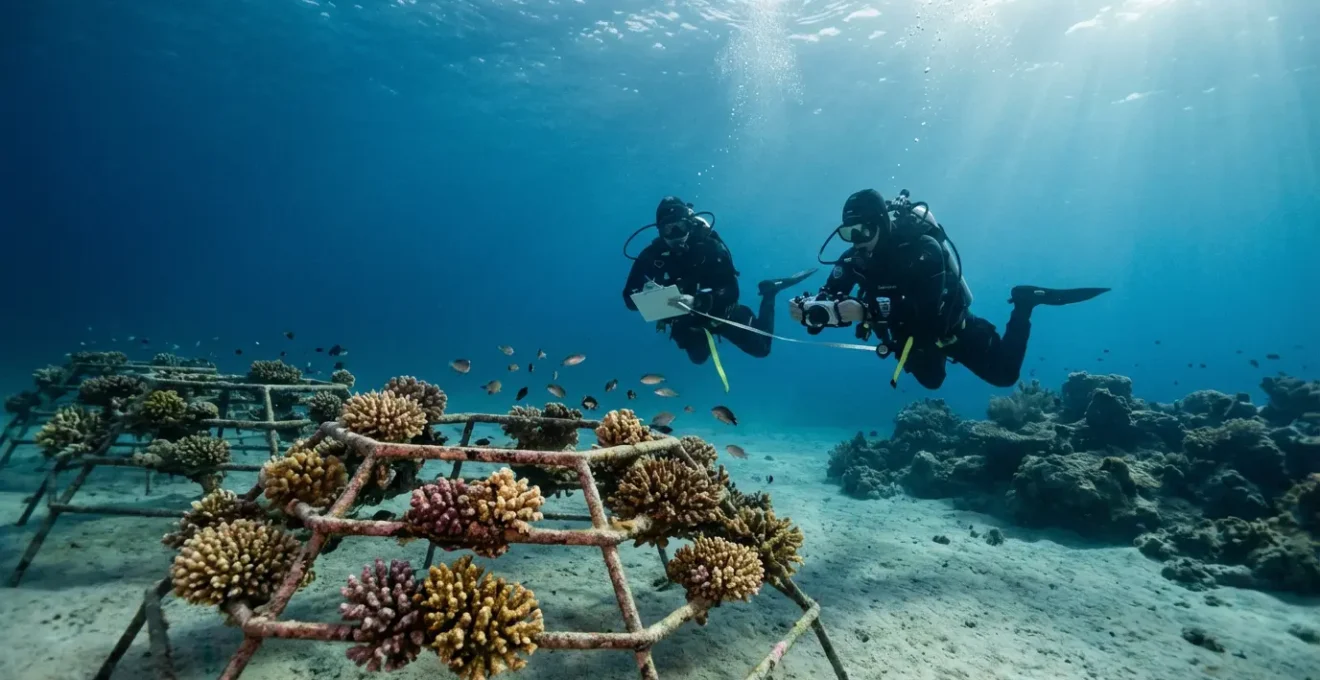
You see the appeals in your inbox and social media feeds: “Adopt a Coral,” “Help Us Save a Reef.” The impulse to contribute to healing our oceans is powerful, but for the discerning donor and eco-tourist, a healthy dose of skepticism is warranted. We are often shown compelling images of divers carefully cementing small coral fragments onto frames, and success is framed by the sheer number of corals planted. This narrative is simple, satisfying, and often deeply misleading.
But what if the number of corals planted is the wrong metric entirely? What if the real measure of success is something projects rarely talk about: long-term survival, genetic resilience, and the return of a functioning, biodiverse ecosystem? From an Environmental Impact Auditor’s perspective, the vast majority of projects fail to provide the data needed to verify their claims. The feel-good marketing often masks a lack of genuine, lasting ecological return.
This article moves beyond the public relations stunts. It adopts the skeptical, data-driven lens of an impact auditor to arm you with the critical questions you need to ask. We will dissect spectacular failures to understand what not to do, differentiate between restoration techniques that prioritize short-term visuals versus long-term resilience, and expose the vanity metrics used to obscure a lack of real progress. Ultimately, this guide provides a concrete framework to vet any restoration project, ensuring your support funds genuine ecological recovery, not just sophisticated greenwashing.
This analysis will equip you with the tools to critically evaluate the claims of any organization. We will explore the key indicators of a successful project, from the science of planting to the metrics that truly matter, allowing you to invest your resources with confidence.
Summary: Evaluating True Biodiversity Returns in Reef Restoration
- Why Throwing Tires into the Ocean Failed as a Restoration Strategy?
- How to Transplant Nursery Corals So They Survive the First Storm?
- Cloning vs Sexual Reproduction: Which Method Creates Resilient Reefs?
- The “Adopt a Coral” Scam That Has No Physical Location
- When to Expect Fish Populations to Return After Installing a Frame?
- iNaturalist vs CoralWatch: Which App Actually Helps Researchers?
- Why Tracking “Total Registered Users” Is a Vanity Metric That Hides Churn?
- Why Environmental Stewardship Is Becoming a Non-Negotiable Metric for Modern Consumers?
Why Throwing Tires into the Ocean Failed as a Restoration Strategy?
The story of the Osborne Reef off the coast of Florida is a masterclass in how well-intentioned environmental projects can devolve into ecological and financial nightmares. In the 1970s, the plan was simple and seemingly clever: sink two million bundled tires to create a massive artificial reef, providing habitat for fish and a destination for divers. It was championed as a win-win solution for tire disposal and marine conservation. The reality, however, was a catastrophic failure of ecological planning.
The fundamental error was a misunderstanding of the marine environment. The steel clips holding the tire bundles together quickly corroded and failed in the saltwater. Freed from their anchors, the tires began to move with the ocean currents and storm surges. Instead of forming a stable habitat, they became a destructive, mobile blight, scouring the seabed and destroying the very natural coral communities they were meant to augment. The smooth, unstable rubber surfaces proved to be a poor substrate for coral larvae to settle on, attracting only limited, low-value encrusting species.
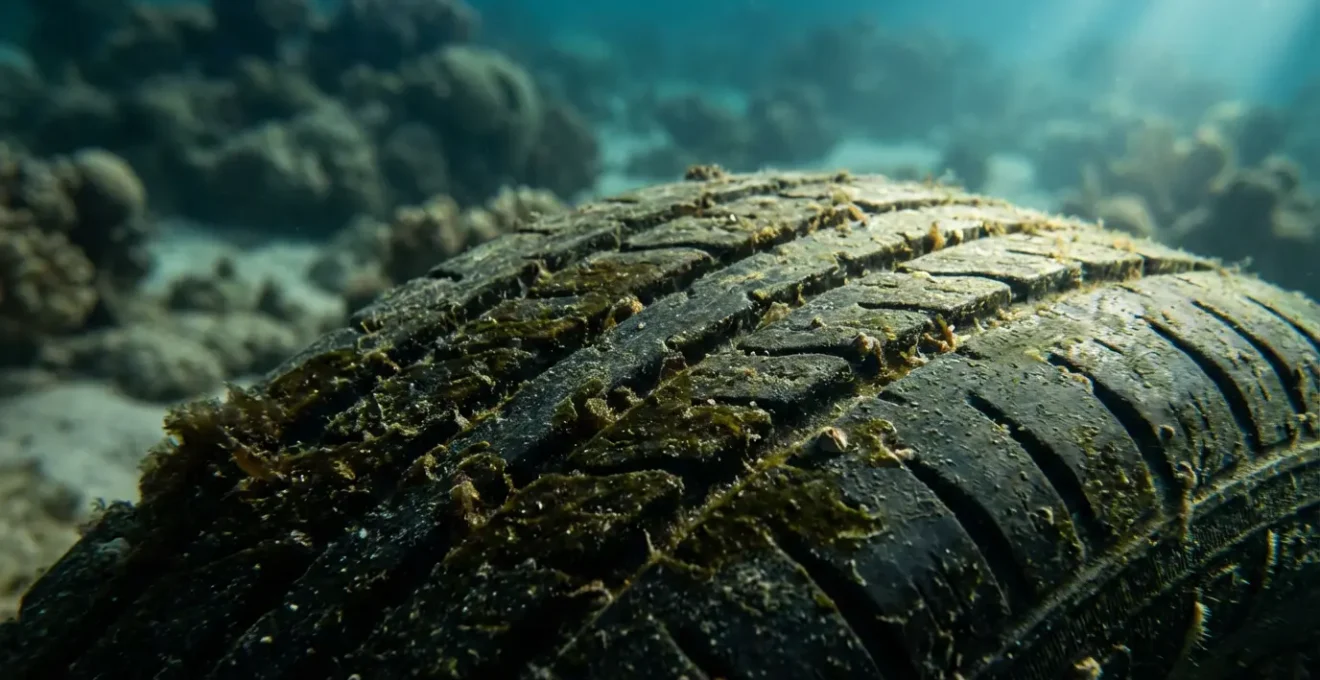
The aftermath is a staggering environmental and financial debt. The tires have washed ashore along miles of coastline and continue to damage nearby natural reefs. Cleanup efforts have been sporadic and incredibly expensive. The ongoing financial burden of this failed restoration project shows that an estimated $40-100 million cleanup cost may be needed to address the more than 500,000 tires still littering the ocean floor. The Osborne Reef serves as a stark reminder that without rigorous scientific foresight and an understanding of material science and ocean dynamics, restoration projects can cause more harm than good.
How to Transplant Nursery Corals So They Survive the First Storm?
In stark contrast to the abject failure of tire reefs, the science of coral aquaculture and transplantation has matured into a viable, data-driven restoration method. The key to success, however, lies not just in growing corals in a nursery but in outplanting them with a strategy engineered for long-term survival, especially against the primary threat of storm surge. A project’s true competence is revealed in its methodology for ensuring these fragile fragments survive their first year in the wild.
Effective organizations employ a multi-faceted approach that amounts to resilience engineering. It begins with site selection. Instead of choosing locations for convenience, teams use predictive hydrodynamic models to identify “low-energy refugia”—areas naturally sheltered from the most intense wave action. This is followed by biomimicry in planting design; arranging coral fragments in specific cluster patterns can collectively dissipate wave energy, much like a natural thicket, protecting the entire colony.
Furthermore, genetic strategy is paramount. Sophisticated projects match specific coral genotypes to the micro-climates of the outplanting site, using genetic data to select for heat tolerance or disease resistance. They also create a balanced portfolio, combining fast-growing but fragile branching species like Acropora cervicornis with slow-growing, robust massive corals like brain corals. This balances rapid habitat creation with long-term stability. Finally, the attachment method itself requires redundancy. Top-tier projects secure fragments using multiple attachment points with a combination of marine-grade epoxy and secondary fasteners like zip ties, ensuring that if one point fails, the coral remains secured.
Cloning vs Sexual Reproduction: Which Method Creates Resilient Reefs?
A central question in restoration is how to generate the corals for outplanting, and the two primary methods—cloning and sexual reproduction—have vastly different implications for the long-term resilience of a reef. Understanding a project’s choice here provides deep insight into their strategic goals: are they aiming for rapid but fragile visual cover, or slow but robust ecological recovery?
Cloning, or asexual propagation, is the most common method. It involves “microfragmentation,” where a larger colony is broken into many small pieces. Because these fragments are genetically identical clones, they recognize each other and can fuse together, allowing them to grow into a large colony much faster than a single individual. This technique is excellent for rapidly increasing coral cover and is visually impressive. However, it creates a genetic monoculture. An entire section of a restored reef could be composed of clones from a single parent, making it uniformly vulnerable to a specific disease or a future heatwave. If that genotype is susceptible, the entire restored patch could be wiped out in a single event.
Sexual reproduction, or “larval propagation,” is far more complex but addresses this critical vulnerability. It involves collecting coral spawn (eggs and sperm) during natural spawning events, facilitating fertilization in a lab, and then settling the genetically unique larvae onto special substrates. This process is slower and has historically had lower success rates, but it is the only way to introduce new genetic diversity into a population. This diversity is the raw material for natural selection and the ultimate key to creating a reef that can adapt to future climate change and other stressors. As leading researchers point out, relying solely on cloning is a high-risk strategy.
Even for successful restoration actions, it is unlikely that such limited taxonomic diversity could provide the range of ecological functions needed to maximize community resilience.
– Boström-Einarsson et al., PMC Nature Study on Restoration Scaling
A truly forward-thinking restoration program, therefore, employs a hybrid strategy. It uses cloning for rapid structural development while simultaneously investing in the more challenging but essential work of larval propagation to seed the reef with the genetic resilience needed to survive the century.
The “Adopt a Coral” Scam That Has No Physical Location
The “Adopt a Coral” model is an attractive fundraising tool, creating a personal connection between a donor and the cause. You give money, you get a certificate with a picture, and sometimes a name for “your” coral. While many reputable organizations use this model transparently, it has also been co-opted by fraudulent or ineffective groups that exploit donor goodwill. The most egregious versions are programs with no verifiable physical location for their claimed restoration work.
These operations exist primarily online. They may show generic underwater photos or videos of coral planting, but they provide no specific, verifiable details about where their work is taking place. The money donated may go entirely to marketing and administration, with little to no actual restoration being performed. With over 850 coral reef restoration projects now operating globally, the proliferation of initiatives makes it easy for such scams to hide in plain sight. As a donor, it is your responsibility to demand proof of existence and impact. The burden of proof lies with the organization, not the donor.
To protect yourself and ensure your funds contribute to real conservation, you must adopt an auditor’s mindset. This involves moving past the emotional appeal and demanding hard, verifiable data. A legitimate organization will be transparent and eager to share evidence of their work. The following checklist provides a framework for your due diligence.
Donor’s Due Diligence Checklist for Coral Adoption Programs
- Demand GPS coordinates of specific outplanting sites and check if there is public access to this location data.
- Request time-stamped monitoring reports showing coral survival rates over at least 12-24 months, not just photos from the day of planting.
- Cross-reference claimed restoration sites with historical imagery on platforms like Google Earth to look for visible changes over time.
- Verify the organization’s registration with established oversight bodies like the Coral Restoration Consortium or a national charity commission.
- Look for third-party audits or, ideally, peer-reviewed scientific publications that validate the organization’s claimed impacts and methodology.
If an organization is unable or unwilling to provide this level of evidence, consider it a major red flag. True environmental stewardship is about measurable outcomes, not unverifiable promises.
When to Expect Fish Populations to Return After Installing a Frame?
The ultimate goal of reef restoration is not just to grow coral; it’s to restore a functioning ecosystem. A key indicator of this functional recovery is the return of a diverse and abundant fish population. Planting coral fragments on a frame is just the first step. The real question is: how long until that structure becomes a home? The answer depends on a process called ecological succession, and the timeline is often longer than donors expect.
Initially, the new structures attract small, herbivorous fish like damselfish and parrotfish. They are drawn to the developing algal turf on the frames and find refuge from predators within the complex 3D structure. This first wave can appear within a few months. Their grazing activity is crucial, as they clean the surfaces of the structure, creating space for more coral larvae to settle and grow. This is the foundational stage of community development.
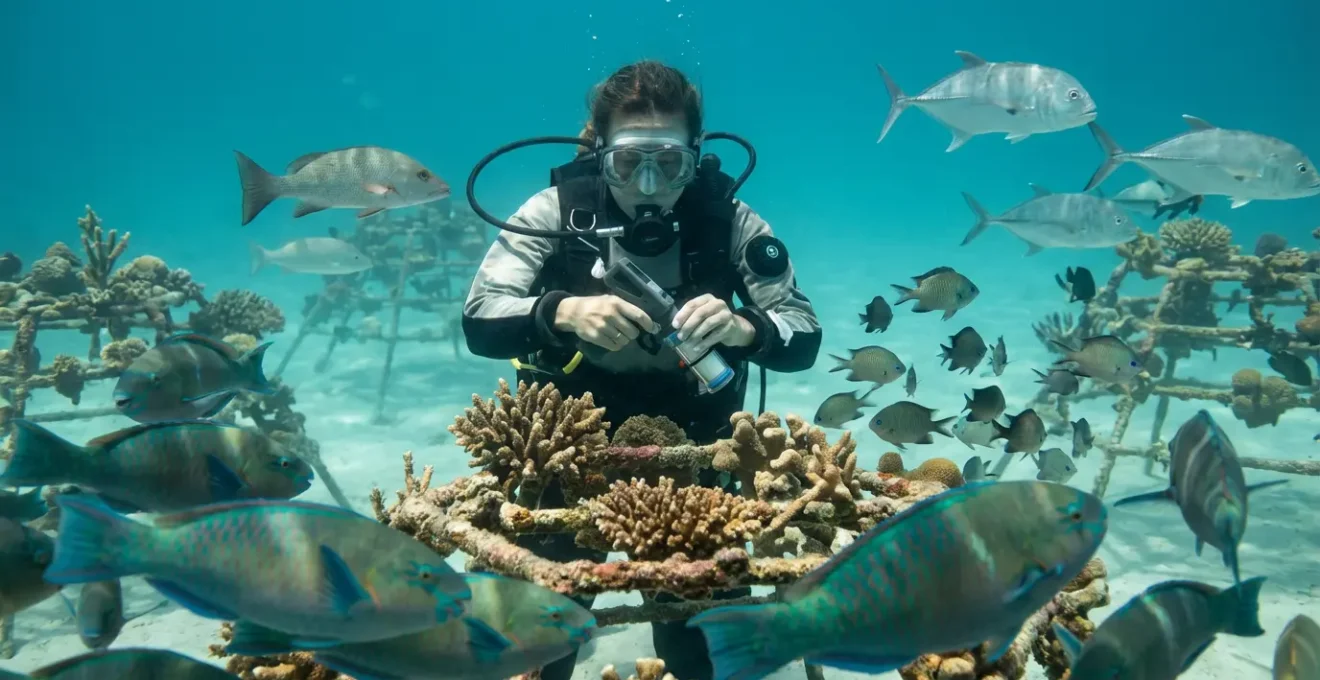
As the coral colonies grow and the structural complexity of the site increases over several years, the fish community begins to change. The growing reef offers more specialized niches, attracting a wider variety of species, including wrasses, butterflyfish, and eventually, larger predators like groupers and snappers who are drawn by the abundance of smaller prey. Studies comparing restored and unrestored sites consistently show a significant increase in both reef fish abundance and live coral cover, confirming the positive feedback loop between coral growth and fish diversity. It can take 3-5 years to see a significantly complex fish community and potentially a decade or more for the ecosystem to approach the maturity of a natural, undisturbed reef. The economic importance of this functional recovery is immense; the estimated global economic output from coral reef ecosystem services is a staggering $9.9 trillion annually.
iNaturalist vs CoralWatch: Which App Actually Helps Researchers?
Citizen science apps have empowered tourists and locals to contribute to marine research, but not all data is created equal. From a researcher’s perspective, the utility of an app depends entirely on the type of question being asked. Two popular platforms, iNaturalist and CoralWatch, serve fundamentally different—and equally important—purposes. A savvy eco-tourist chooses their tool based on the data they intend to collect.
iNaturalist is a biodiversity documentation tool. Its primary function is to answer the question: “What species is this, and where was it found?” Users upload a photo of an organism, and a community of experts (along with AI) helps identify it. This is incredibly valuable for mapping species distributions, identifying invasive species, and documenting rare sightings. However, the data is unstructured; it’s a collection of individual points, and its scientific validity depends heavily on expert verification of each observation.
CoralWatch, by contrast, is a highly structured monitoring tool designed to answer a very specific question: “How healthy is this coral, and is it bleaching?” It doesn’t focus on species ID. Instead, users compare the color of a coral to a standardized Coral Health Chart and record the corresponding code. This generates quantitative, standardized data on the extent and severity of coral bleaching events. Because it uses a standardized chart, the data requires less expert validation and can be directly integrated into global bleaching databases. The table below breaks down the key differences.
| Feature | CoralWatch | iNaturalist |
|---|---|---|
| Data Type | Structured, standardized via Coral Health Chart | Unstructured, photo-based observations |
| Primary Use | Quantitative bleaching analysis | Species identification and range extension |
| Research Question | How much and where (bleaching extent) | What species is present here |
| Validation Required | Minimal – uses standardized color chart | Significant expert review needed |
| Data Integration | Direct feed to bleaching databases | Feeds to GBIF after validation |
As the University of Miami’s coral research team notes, the true power of these apps is their ability to feed into larger systems. The ultimate value lies not in the app itself, but in its connection to global data aggregators like the Global Biodiversity Information Facility (GBIF). So, which app helps more? Both do, but they answer different questions. Use CoralWatch to report bleaching. Use iNaturalist to document the biodiversity you see on the reef.
Key Takeaways
- True restoration success is measured by long-term ecosystem function (e.g., fish return), not short-term planting numbers.
- Demand transparency and verifiable data, including multi-year survival rates and GPS coordinates, before supporting any project.
- Genetic diversity, achieved through methods like larval propagation, is non-negotiable for building reefs resilient to future climate change.
Why Tracking “Total Registered Users” Is a Vanity Metric That Hides Churn?
In the world of tech startups, “total registered users” is a classic vanity metric. It sounds impressive, but it says nothing about how many people are actually using the product. A service could have millions of sign-ups but only a few thousand active users, a sign of high churn and a failing business model. This same flawed logic is frequently applied in the world of conservation, where easily quantifiable but ultimately meaningless numbers are used to project an image of success.
In reef restoration, the equivalent of “total registered users” is “number of corals planted” or “number of volunteers engaged.” These figures are easy to count and look great in an annual report, but they are dangerously misleading. Planting 10,000 coral fragments means nothing if 95% of them die within the first year due to poor site selection or a disease outbreak. Engaging 500 volunteers is a great community outreach achievement, but it is not an ecological outcome.
The core problem is a fundamental disconnect between the monitoring timeframe and the ecological timeframe required for recovery. A reef ecosystem takes decades to fully mature. However, a comprehensive UNEP report on restoration projects found a critical gap: most projects monitor for only 12 months, if at all. This is ecologically insignificant. It’s like judging the success of a reforested area by counting the saplings planted and then walking away, never checking to see if they survived their first winter or grew into a functional forest. An auditor must look past these vanity metrics and ask for the numbers that truly matter: percentage of coral survival at 1, 3, and 5 years; increase in fish biomass and diversity; and improvement in genetic diversity.
Why Environmental Stewardship Is Becoming a Non-Negotiable Metric for Modern Consumers?
The demand for verifiable environmental impact is no longer a niche concern; it is rapidly becoming a mainstream expectation for consumers, investors, and governments alike. This shift is driven by a growing awareness that ecological health is directly tied to economic stability and human well-being. For coral reefs, this connection is undeniable. The ecosystem services they provide—from coastal protection and fisheries to tourism—are immense, and their degradation represents a tangible economic threat.
This evolving consciousness means that “greenwashing” is becoming a riskier strategy for organizations. Modern donors and eco-tourists are more educated and more skeptical. They are moving beyond simple narratives and demanding the same level of accountability and return on investment that they would expect from a financial portfolio. Projects that cannot provide clear, data-backed evidence of their ecological impact will increasingly be seen as untrustworthy and will lose funding and social license to operate. Innovation in this space is now focused on traceability and verifiable impact, as seen in projects like the Coast3D initiative, which used modular 3D-printed systems to install custom-designed reefs in the Red Sea, each with a specific, measurable footprint.
This demand for accountability is being echoed at the highest levels of global policy, cementing environmental stewardship as a critical component of national and corporate strategy.
Last June, the 2025 United Nations Conference concluded with a strong call from 11 global leaders to prioritize resilient reef systems in national policies and to incorporate reef protection into climate and biodiversity roadmaps.
– UN Ocean Decade Report, Ocean Science in Action Conference
This top-down pressure, combined with bottom-up consumer demand, is creating a new paradigm. Environmental stewardship, proven through transparent data, is no longer a “nice-to-have” component of corporate social responsibility; it is a non-negotiable metric of a project’s viability and legitimacy.
Your donation and your tourism dollars are your vote for the future of our oceans. By learning to read between the lines of marketing materials and demanding data-backed evidence of ecological return, you directly contribute to a more effective and honest conservation industry. The next time you consider supporting a project, use this auditor’s mindset to ensure your investment builds a resilient future for our reefs.