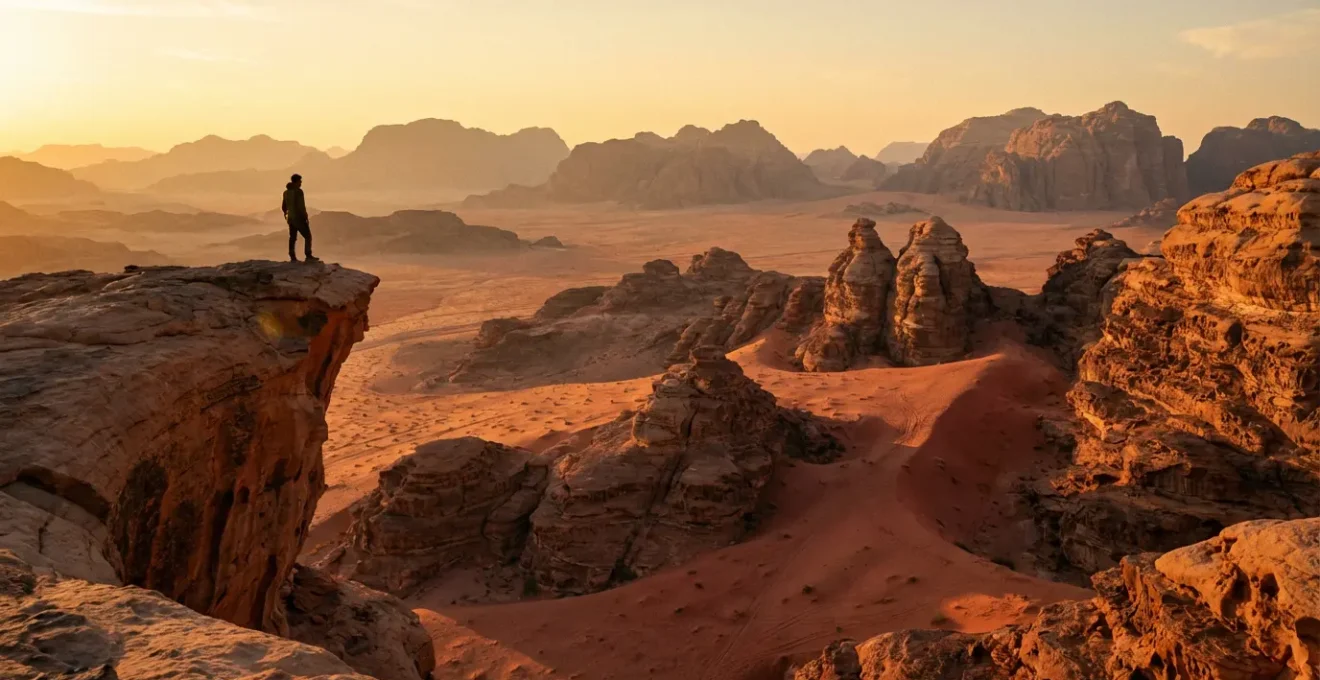
The secret to an authentic Wadi Rum experience isn’t finding a hidden camp; it’s bypassing the pre-packaged tourist system altogether.
- Engaging directly with Bedouin guides, not agencies, unlocks fair pricing and personalized itineraries.
- Choosing a traditional bivouac over a luxury tent is the key to an immersive, “Lawrence of Arabia” style adventure.
Recommendation: Shift your mindset from being a consumer of a tour to becoming a respectful guest in the desert. This guide shows you how.
The promise of Wadi Rum is one of vast, echoing silence. A landscape so monumental it was described by T.E. Lawrence as “god-like.” Yet for many modern travelers, the reality is a far cry from that solitary splendor. The experience is often distilled into a predictable loop: a bumpy ride in a crowded jeep, a photo-op at a famous rock bridge, and a night in a “bubble” tent camp that feels more like a resort than a desert outpost, complete with buffet dinners and Wi-Fi. The very solitude you came to find is lost in a well-managed, but ultimately sterile, tourist bubble.
The common advice to “go off the beaten path” often leads you down another, slightly less-traveled, pre-packaged trail. But what if the key to unlocking the true soul of the desert wasn’t about finding a different set of GPS coordinates, but about changing your entire approach? What if the real adventure lies not in the sites you visit, but in how you engage with the desert and its people? This is about developing a form of desert literacy—understanding its rhythms, its people, and its unwritten rules. It’s about moving from a transactional tourist to a temporary, respectful guest.
This guide provides the practical framework to do just that. We will deconstruct the tourist infrastructure to reveal the mechanics of the direct-to-guide economy. We’ll explore why the very rock under your feet dictates a unique approach to adventure and how to read the landscape like the nomads who have thrived here for centuries. Forget the standard itinerary; this is your blueprint for a genuinely solitary and profound Wadi Rum experience.
Summary: How to Find True Solitude in Wadi Rum (and Escape the Tourist Traps)
- Why the Sandstone of Wadi Rum Is Unique for Traditional Climbing?
- How to Find an Independent Bedouin Guide Without Agency Markups?
- Bivouac vs Bubble Tent: Which Offers the True Lawrence of Arabia Experience?
- The Jeep Tour Pricing Trap That Overcharges Tourists by 200%
- When to Visit the Rock Bridges for Perfect Golden Hour Lighting?
- How to Navigate Featureless Dunes Using Only Wind Direction and Stars?
- How to Negotiate a Long-Term Homestay for Deep Cultural Learning?
- What Modern Travelers Can Learn About Resource Management from Desert Expedition Nomads?
Why the Sandstone of Wadi Rum Is Unique for Traditional Climbing?
The spirit of adventure in Wadi Rum is literally written in the rock. Unlike the sport climbing hotspots of Europe, this desert is a sanctuary for “traditional” or “trad” climbing. This isn’t just a stylistic choice; it’s a philosophy born from the unique nature of the sandstone itself. The rock here is relatively soft, composed of layers that create a paradise of vertical cracks, fissures, and flakes. These natural features are perfect for placing temporary, removable protection, making fixed bolts or anchors not only unnecessary but a desecration of the rock’s natural state.
This purist ethic was established by the area’s climbing pioneers. Upon discovering the potential in 1984, climbers like Tony Howard made a conscious decision to import their traditional climbing values. They sought to ascend these magnificent formations while leaving no trace. This commitment was so profound that from 1985 to 1995, 100% of first ascents were achieved using purely traditional ethics. This approach requires more than physical strength; it demands desert literacy, route-finding skill, and a deep respect for the environment.
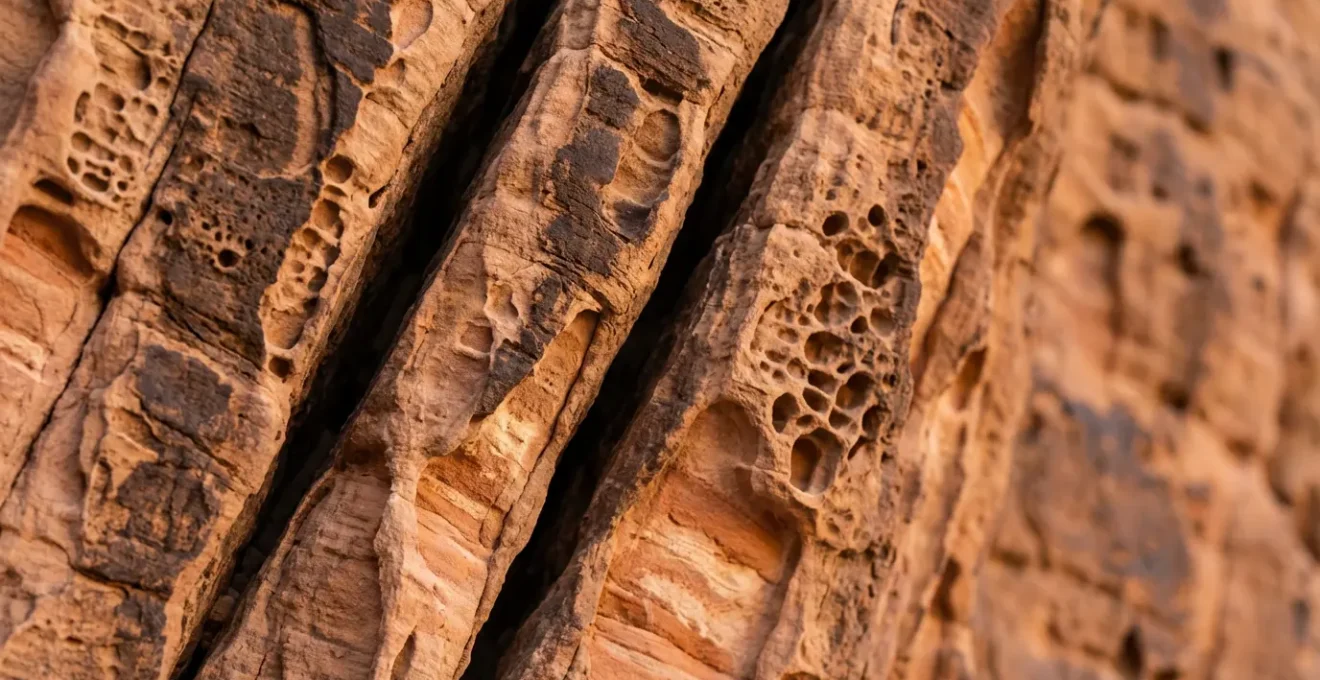
As the close-up of the rock reveals, the sandstone is a tapestry of opportunities for the observant climber. The honeycomb weathering, dark streaks of “desert varnish,” and extensive crack systems are not just beautiful; they are the handholds and protection points of a trad climber’s route. To climb in Wadi Rum is to engage in a conversation with the rock, reading its history and weaknesses to find a path to the summit. It is the ultimate expression of the adventurous, self-reliant spirit this landscape demands.
How to Find an Independent Bedouin Guide Without Agency Markups?
The single most important decision you’ll make in Wadi Rum is not which camp to book, but which guide to hire. The mainstream tourist path leads through international booking platforms and large agencies, which act as middlemen, inflating costs and standardizing the experience. To find true solitude, you must access the direct-to-guide economy. This means connecting with an independent Bedouin guide whose family has lived in the desert for generations.
The financial benefit of this approach is staggering. By bypassing the layers of commission, you not only pay a fair price but also ensure that 100% of your money goes directly to the local community. The difference in cost isn’t a small discount; it’s a fundamental shift in value. You are paying for a genuine experience, not a marketing budget and an office in another country. The following table, compiled from traveler reports, illustrates this disparity clearly.
| Booking Method | Tour Type | Price per Person | What’s Included |
|---|---|---|---|
| Direct with Guide | Full Day + Night | 55 JOD | Lunch, dinner, accommodation, breakfast |
| Through Agency | 2 Days/2 Nights | 185 JOD | All meals, accommodation, 1hr camel ride |
| Visitor Center | 4 Hours | 65 JOD | Tour only, no meals or accommodation |
| Direct Family Business | 1 Day + 1 Night | 60 JOD | Jeep tour, traditional lunch, dinner, accommodation, breakfast |
As this analysis of actual tourist pricing shows, booking direct can be less than a third of the cost of an agency package for a comparable, if not superior, experience. But how do you make this connection? It requires a small investment of time upfront, but the payoff is immense.
Your Action Plan for Finding a Genuine Bedouin Guide
- Initial Contact: Use WhatsApp to contact a few recommended independent guides. Don’t just ask for a price; ask about their family, their favorite places in the desert, and what they enjoy showing guests. This conversation is your first filter.
- Program Co-creation: Instead of choosing a pre-set tour, propose your interests. Are you a photographer, a hiker, a history enthusiast? A good independent guide will work *with* you to build a custom itinerary.
- The Tea Protocol: Upon arrival in the village, accept an invitation to the guide’s home for tea before the tour begins. This is not just a formality; it is the cornerstone of Bedouin hospitality and the moment a business transaction transforms into a personal relationship.
- Price Confirmation: During tea, confirm the all-inclusive price for your custom program. With an independent guide, the price discussed is almost always the final price, covering the tour, all meals, and overnight sleeping arrangements.
- Trust the Vibe: Ultimately, choose the guide you connect with on a human level. The best desert experiences come from mutual respect and shared curiosity, not a contract.
Bivouac vs Bubble Tent: Which Offers the True Lawrence of Arabia Experience?
The image of the luxury “bubble tent” has become synonymous with Wadi Rum, promising a night under the stars from the climate-controlled comfort of a plastic dome. While an impressive feat of engineering, it represents the very antithesis of a true desert immersion. It places a literal and figurative barrier between you and the environment. The genuine “Lawrence of Arabia” experience is not found in luxury amenities, but in radical simplicity. This is the Bivouac Mindset: choosing to sleep in the open desert, under a blanket of stars, with nothing but a campfire and the vast silence for company.
T.E. Lawrence himself captured the profound spirit of this place when he called it “Rum the magnificent, vast, echoing and god-like.” This feeling cannot be accessed through a panoramic window. It is felt through the cool sand under your sleeping mat, the scent of burning wood, and the overwhelming spectacle of the Milky Way arching across an ink-black sky, unobscured by artificial light. Choosing a bivouac, often referred to as “sleeping under the stars,” is an active decision to engage with the desert on its own terms.
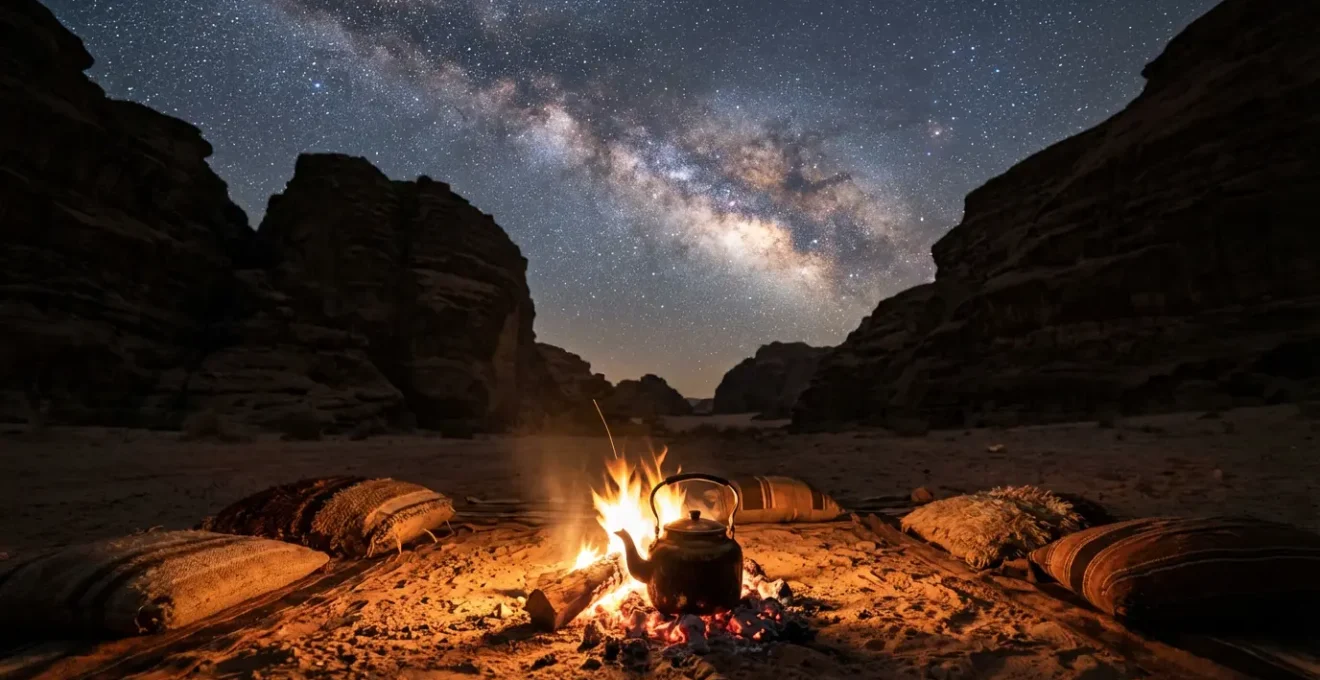
This isn’t about “roughing it” for the sake of discomfort. A good Bedouin guide will establish a comfortable camp in a sheltered, stunning location. They provide mattresses, warm blankets, and prepare a delicious dinner over the open fire. The experience is not one of deprivation, but of pure connection. It’s about conversations around the fire, sipping sweet Bedouin tea, and falling asleep to the profound quiet of the desert. While the bubble tent offers a spectacle to be viewed, the bivouac offers an environment to be lived.
The Jeep Tour Pricing Trap That Overcharges Tourists by 200%
The pricing structure of Wadi Rum jeep tours is a perfect example of asymmetrical value, where tourists often pay a premium for a standardized, crowded, and ultimately less valuable experience. The biggest mistake travelers make is assuming that a higher price equals a better tour. In Wadi Rum, the opposite is often true. The most expensive tours are typically sold through international agencies, with multiple layers of commission inflating the final cost.
Direct booking with a local Bedouin family business can cut out these middlemen, resulting in dramatic savings. The difference is not trivial; an analysis of prices reported by travelers reveals a staggering 237% price difference between direct and agency bookings for comparable full-day tours with an overnight stay. This isn’t just a markup; it’s a completely different economic model. One sells a packaged product, the other offers a genuine service.
To navigate this landscape, you must be aware of the common pricing tactics. Some camps lure you in with a very low price for accommodation but then charge exorbitant rates for the mandatory jeep tour. Others do the opposite. An independent guide will almost always give you a single, all-inclusive price per person that covers the tour, meals, and sleeping arrangements. It’s also crucial to remember that the 5 JD per person entrance fee to the Wadi Rum protected area is almost never included in any tour price and must be paid separately at the Visitor Center upon arrival.
Finally, understand the difference between “per-person” and “per-jeep” pricing. While the Visitor Center offers fixed “per-jeep” rates for shorter tours, most full-day and overnight experiences are priced “per-person.” For families, it’s worth noting that most local guides offer significant discounts, with children under 15 often at 50% off and younger children being free, a flexibility rarely found in rigid agency packages.
When to Visit the Rock Bridges for Perfect Golden Hour Lighting?
Wadi Rum’s iconic rock bridges are geological marvels, but their true magic is revealed by light. Most jeep tours visit these landmarks midday, when the sun is harsh, the crowds are thick, and the heat is intense. The experience becomes a quick photo-op rather than a moment of awe. The secret to capturing their grandeur is to plan your visit around the “golden hours”—the period shortly after sunrise and before sunset when the light is soft, warm, and casts long, dramatic shadows.
Timing your visit is a two-part strategy: choosing the right season and the right time of day. The best overall conditions are found in the spring (March to May) when the weather is pleasant and wildflowers add a splash of color to the red sand. The autumn months (October and November) are also excellent. While winter offers mild daytime temperatures, it can get surprisingly cold at night.
For the ultimate photographic experience, target the largest of the natural arches, Burdah Rock Bridge. Standing at an impressive 80 meters high, it requires a bit of a hike to reach the best vantage points, making the comfortable weather from October to April ideal. Here is a plan for the perfect shot:
- Target Sunrise: Arrange with your guide to visit Burdah Rock Bridge for sunrise. You will have the entire place to yourself, and the quality of light is just as stunning as sunset.
- Find Your Vantage Point: Don’t just stand underneath it. The most dramatic photos are taken from the adjacent cliffs during the hour *after* sunrise, allowing the low-angle light to illuminate the arch and create deep shadows that reveal its texture and scale.
- Consider the Seasons: Winter days, though cool, offer the benefit of a longer golden hour, giving you more time to hike and set up your shots in perfect light.
How to Navigate Featureless Dunes Using Only Wind Direction and Stars?
To the untrained eye, the vast dune seas of Wadi Rum can seem like a beautiful but disorienting void. But to the Bedouin, the landscape is a map, full of subtle clues. True desert literacy is the ability to read these signs. This skill was honed not for tourism, but for survival. Historically, Bedouin climbers and hunters navigated these complex terrains barefoot, not to conquer summits, but to stalk ibex in the high, shadowy basins, relying on an intimate knowledge of the land.
Modern travelers can learn from this deep-rooted knowledge. While you’ll have a guide, understanding the principles of Bedouin navigation transforms your perception of the desert from a featureless expanse to a logical, readable system. For example, the very geology of Wadi Rum provides a macro-compass. A geological analysis of the area reveals two main sets of joints or cracks in the sandstone. The North-South joint sets are older and more heavily eroded, creating the wide, main valleys. The younger East-West sets are narrower and perpendicular to them. Understanding this underlying grid helps make sense of the entire landscape’s structure.
On a more micro level, the Bedouin use natural indicators that are always present:
- The Stars: The night sky in the desert is a brilliant, reliable map. Polaris (the North Star) is the most obvious anchor, but experienced guides can determine direction from a multitude of constellations as they move across the sky.
- The Wind: The prevailing winds in the desert sculpt the sand dunes into predictable patterns. The gentle, sloping side of a dune (the windward side) and the steep, sharp side (the slip face) provide a consistent directional clue.
- The Sun: The most basic tool, the sun’s path across the sky provides a constant sense of east and west. By observing the length and direction of shadows, a skilled navigator can track the time of day and maintain a steady bearing.
By asking your guide to point out these indicators, you begin to see the desert not as an obstacle, but as a dynamic, living map. You start to read the story told by the wind, the sun, and the stars.
How to Negotiate a Long-Term Homestay for Deep Cultural Learning?
For the traveler seeking more than just a fleeting glimpse into Bedouin life, a long-term homestay offers an unparalleled opportunity for deep cultural immersion. This goes far beyond a typical tourist stay. It’s about being welcomed into the rhythm of family life, sharing meals, and engaging in the daily flow of conversation and chores. As one traveler noted after a two-day stay that felt like a mini-homestay, the experience was unforgettable thanks to the “friendly and open hosts” and “interesting insights into the traditional life of the Bedouins.” The goal is to extend that connection from two days to two weeks or more.
Negotiating such an arrangement requires a different approach than booking a tour. It’s not a transaction; it’s the beginning of a relationship built on trust and mutual respect. The key is to follow the unwritten rules of Bedouin hospitality, or what could be called The Tea Protocol. Your negotiation begins not with a question of price, but with the simple act of sharing tea and conversation. This is where you establish a human connection, moving from a potential client to a potential guest.
Here are the key steps to arranging an extended stay:
- Build a Relationship First: Never propose a long-term stay out of the blue. Book a standard 1 or 2-night tour first. Use this time to get to know your guide and their family. Show genuine interest in their life and culture.
- Participate in Communal Life: The heart of a Bedouin camp is the communal tent where everyone gathers for meals, tea, and stories. Be present, listen, ask questions, and share stories of your own. This is where you demonstrate that you are a guest, not just a customer.
- Discuss Contribution, Not Price: When the time feels right, frame your proposal as a contribution. Instead of asking “how much to stay for a month,” ask how you can contribute to the household in exchange for their hospitality. This may involve a financial component, but also offer to help with daily tasks, teach English, or share another skill.
- Ensure Comfort and Safety: When choosing a family to stay with, especially for solo female travelers, look for guides who have a strong family team including women (mothers, sisters, wives) who are part of the operation. This ensures a more integrated and secure environment.
A long-term homestay is the ultimate expression of slow travel, offering a depth of understanding that no jeep tour can provide. It’s an exchange, not a purchase.
Key Takeaways
- True solitude in Wadi Rum comes from bypassing the tourist infrastructure, not just visiting different locations.
- Engaging directly with independent Bedouin guides cuts costs by over 200% and provides a more authentic, personalized experience.
- The “Bivouac Mindset”—sleeping under the stars—offers a profoundly more immersive connection to the desert than a luxury camp.
What Modern Travelers Can Learn About Resource Management from Desert Expedition Nomads?
The final lesson Wadi Rum offers the independent traveler is one of profound relevance in our modern world: a masterclass in resource management. The Bedouin, whose name “badawī” literally translates to “desert dwellers,” have cultivated a way of life that is a testament to resilience and resourcefulness. Their culture is built upon a deep, symbiotic connection with an environment where everything is scarce—water, food, and shelter. To travel with them is to witness a mindset where nothing is wasted and every resource is valued.
This philosophy is evident in the practical operations of a modern, yet traditional, desert camp. Many independent camps now run on solar panels for electricity, a modern adaptation of the ancient principle of harnessing the most abundant resource: the sun. Visitors are gently reminded that both electricity and water are luxuries. This isn’t a lecture, but an invitation to adopt a mindset of conscious consumption. It’s a powerful, tangible experience of what it means to live in harmony with the limits of your environment.
This nomadic heritage teaches a traveler to see the world differently. It’s about carrying only what is necessary, finding multiple uses for a single item, and understanding the value of a shared meal. It teaches that wealth is not measured by possessions, but by knowledge, relationships, and the ability to thrive with less. In a world of overconsumption, the desert offers a powerful antidote: the elegance of simplicity.
Embracing this ethos transforms your journey. You learn to pack lighter, consume less, and appreciate more. The silence, the stars, the simple-yet-delicious food—these become the highlights of your trip. You leave Wadi Rum not just with photographs of a beautiful landscape, but with a renewed perspective on what is truly essential.
Begin your journey into the heart of Wadi Rum by seeking out these direct connections. Adopt this mindset of a respectful guest, and you will be rewarded with an experience of solitude and authenticity that no brochure can ever promise.